Should you brush your cat's teeth? And how do you do it?
How often, how to get it used to it gradually and which options can help.
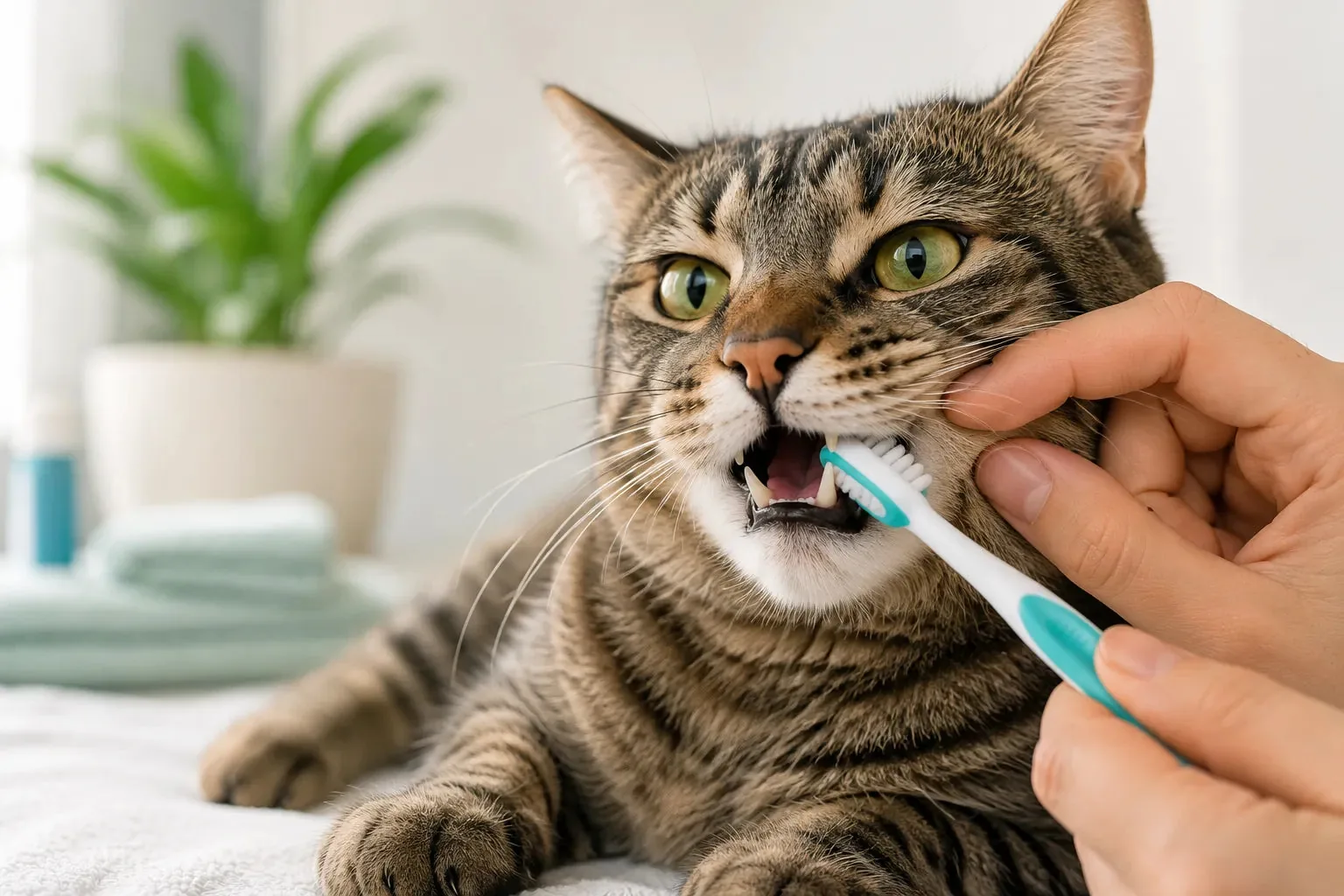
You remember to fill its bowl, clean its litter box and brush its coat, but what about its teeth? Brushing a cat's teeth can seem rather unusual, especially if you've never done it.
Yet plaque builds up on cats' teeth and, over time, can lead to oral health problems. Brushing helps remove it, but you still have to convince your cat to let you do it!
How often should you brush its teeth? How do you get it used to it? And if your cat flatly refuses the brush, what are the other options?
In this article
- Why take care of its teeth?
- Do you really need to brush your cat's teeth?
- Plaque and tartar: what's the difference?
- Before you start, look at its mouth
- How to get it used to brushing gradually
- How do you brush your cat's teeth?
- Which brush and toothpaste should you choose?
- Your cat refuses the brush: what are the other options?
- How to choose a dental product
- Which option should you choose for its teeth?
- When is a dental cleaning at the vet necessary?
- Cat dental care FAQ
Why take care of its teeth?
After a meal, a thin film made up largely of bacteria forms on your cat's teeth: that's dental plaque. If it isn't removed regularly, it can mineralize and form tartar.
Over time, the buildup of plaque and tartar can irritate the gums and contribute to problems like gingivitis and periodontal disease.
Dental problems are common in cats. Between 50% and 80% of cats over four years old have some form of periodontal disease.
Do you really need to brush your cat's teeth?
Yes. Brushing remains the most effective way to remove dental plaque.
Ideally, brushing should be daily. Plaque re-forms quickly, which is why the Veterinary Oral Health Council (VOHC) recommends this frequency.
This pace isn't always realistic, though, especially if your cat has never been used to a brush. Regular brushing is still better than no dental care at home.
And if your cat completely refuses the brush? Other solutions exist. We'll see further on how to choose those whose effectiveness has been evaluated.
Plaque and tartar: what's the difference?
Plaque and tartar are closely linked, but they're not the same thing.
| Plaque | Tartar |
|---|---|
| Soft film that forms on the teeth | Plaque that has mineralized and hardened |
| Can be removed by regular brushing | Can no longer be removed with a toothbrush |
| Builds up quickly after meals | Provides a rough surface where plaque can keep building up |
That's why dental care at home mainly aims to act on plaque before it hardens.
If there's already tartar on your cat's teeth, don't try to scrape it off yourself.
Before you start, look at its mouth
Before introducing the toothbrush, take a few moments to examine your cat's mouth if it accepts being handled this way.
Make an appointment with your veterinarian if you notice:
- red, swollen or bleeding gums;
- persistent bad breath;
- a broken, loose or unusual-looking tooth;
- excessive drooling or blood in the saliva;
- difficulty eating, a sudden reluctance to crunch its food or food falling from its mouth;
- signs of pain when you approach its mouth.
A cat with a toothache doesn't always show it clearly and may even keep eating despite a dental problem. A change in how it chews, its appetite or its tolerance when you touch its face can therefore be a clue.
If its gums are very inflamed or painful, don't try to start brushing. It's better to have a veterinarian examine its mouth before setting up a dental care routine.
How to get it used to brushing gradually
If your cat has never had its teeth brushed, it's best to give it time to discover this new routine. The goal isn't to complete a full brushing on the first try, but to gradually get it used to having its mouth and teeth touched.
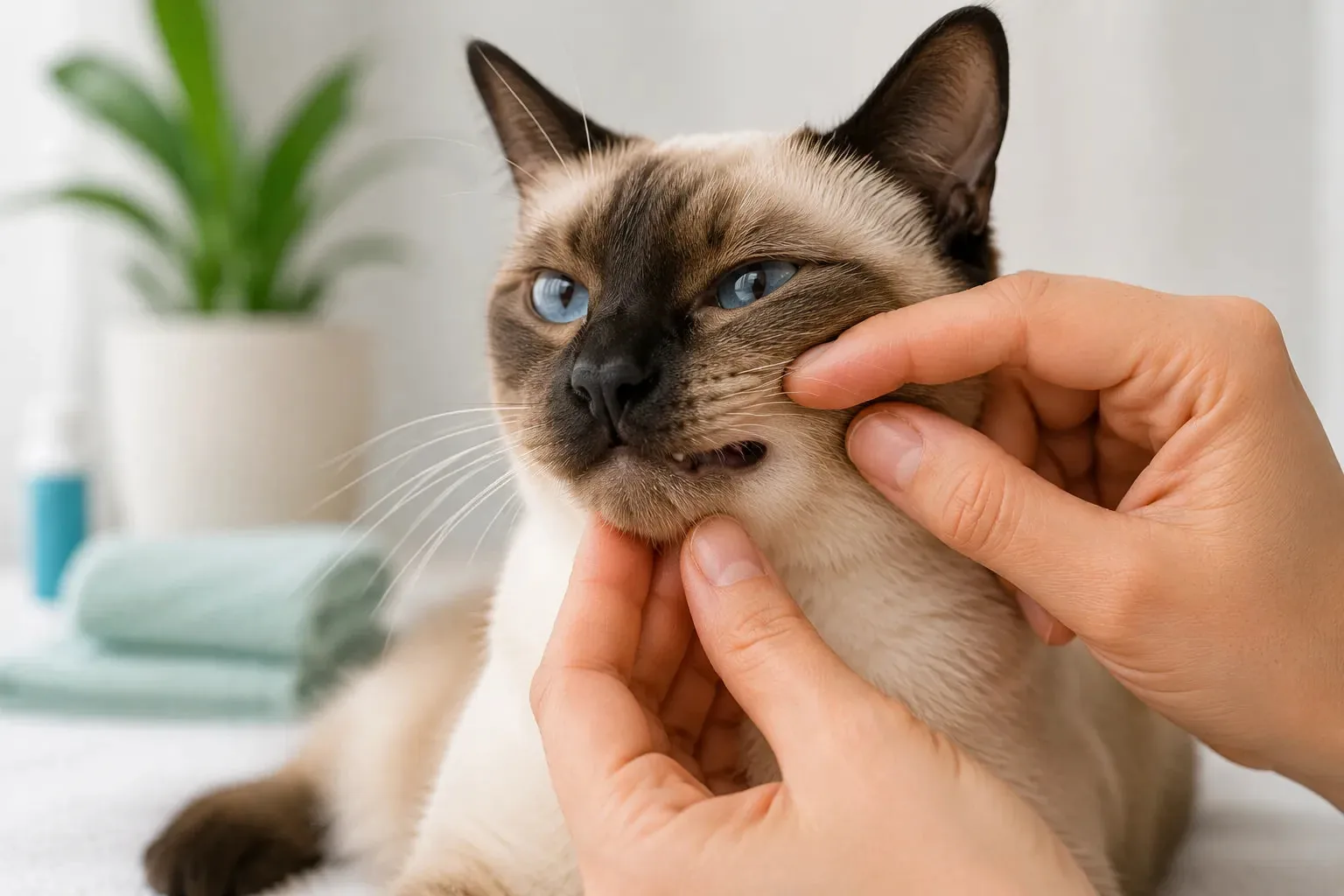
You can move forward in several steps:
- Start with the toothpaste. Put a small amount on your finger and let your cat smell and taste it.
- Get it used to having its mouth touched. When it's comfortable, gently lift its lip and touch a tooth with a little toothpaste.
- Introduce the brush. First let it smell it or lick a little toothpaste placed on the bristles.
- Brush only a few teeth. Start with very short sessions, then gradually increase the number of teeth brushed.
- End with something it enjoys. A small reward, petting or a pleasant moment can help it accept the routine.
This progression can take a few days or several weeks. Above all, follow your cat's pace. If it becomes restless or tries to move away, it's better to stop and try again later rather than force it.
How do you brush your cat's teeth?
Once your cat is used to the brush, choose a time when it's calm and settle in somewhere comfortable.
Put a small amount of cat toothpaste on the brush, then:
- Gently lift its lip. There's no need to open its mouth wide.
- Hold the brush at an angle of about 45 degrees, pointing the bristles toward where the tooth meets the gum.
- Gently brush the outer surface of the teeth, focusing on the canines and back teeth.
- Make small movements along the teeth, without pressing too hard.
Don't worry if you can't reach the inner surface of the teeth. In cats, plaque and tartar build up more on the outer surfaces, on the cheek side. So focus your brushing there.
If your cat starts getting restless or tries to leave, end the session.
Which brush and toothpaste should you choose?
You don't need complicated equipment to get started. Choose a brush small enough for your cat's mouth and a toothpaste made for animals.
Which brush should you use?
A small, soft-bristled brush makes it easier to reach the back teeth while limiting gum irritation. There are models designed specifically for cats, but other options can also work:
- a small cat toothbrush: handy for reaching where the teeth meet the gums;
- a finger brush: easy to handle, but bulkier in a small mouth;
- gauze wrapped around your finger: useful for getting the cat used to contact before moving to the brush.
What about toothpaste?
The Virbac C.E.T. oral hygiene kit for cats, for example, includes an enzymatic toothpaste, a toothbrush and a finger brush.
Never use human toothpaste or baking soda. Their composition isn't meant to be swallowed by a cat and can cause digestive upset.
A flavour your cat likes can also help it accept brushing.
Your cat refuses the brush: what are the other options?
Even if you take time to get it used to it, your cat may not tolerate brushing. Other solutions can then help limit plaque or tartar buildup.
Not all solutions work the same way, however, and none should automatically be considered equivalent to brushing.
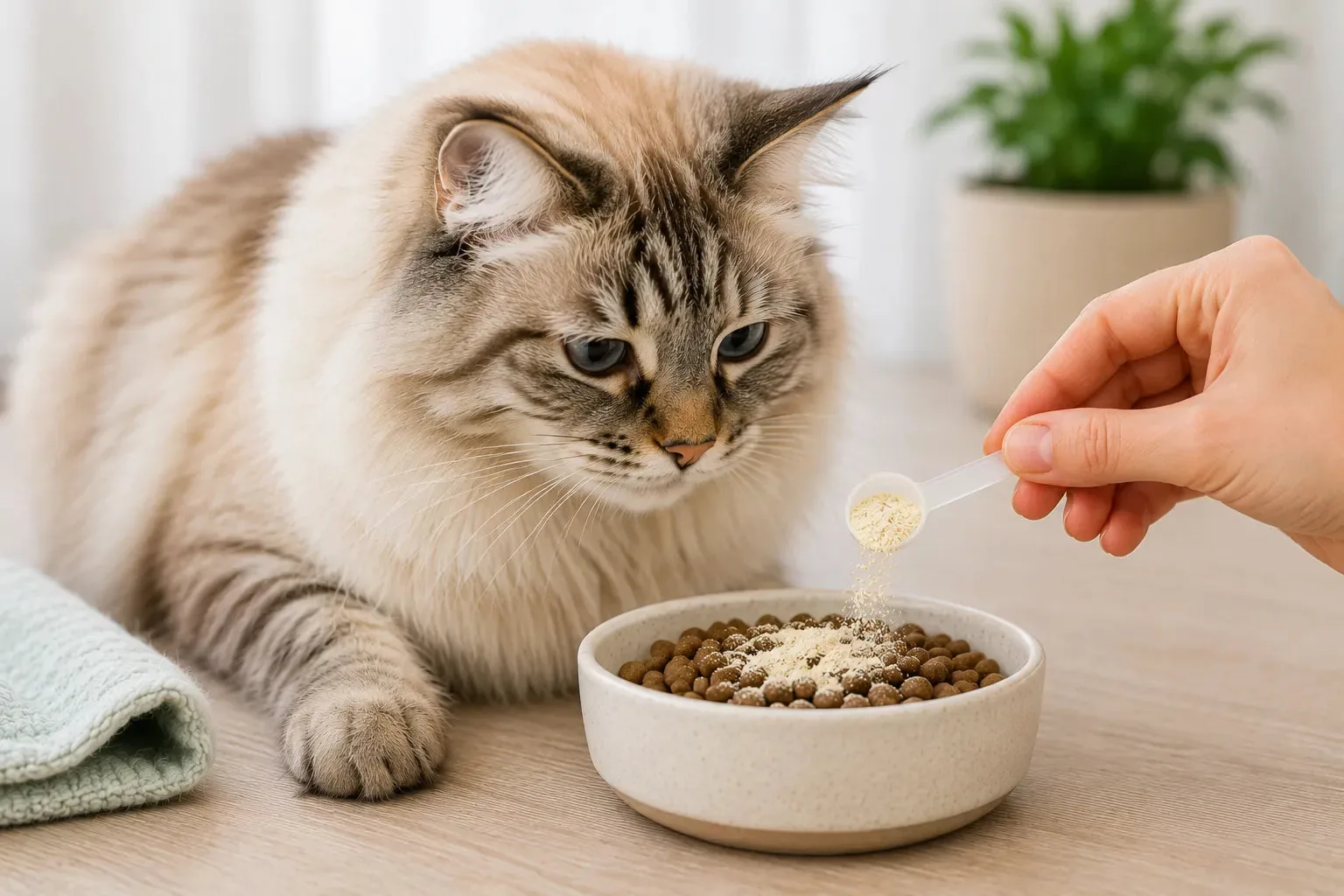
Available options include:
- dental treats: Feline Greenies Dental Treats carry the VOHC seal for tartar control.
- powders added to food: ProDen PlaqueOff powder for cats has received the VOHC seal for plaque and tartar control. Since it contains a seaweed naturally rich in iodine, ask your veterinarian if your cat has a thyroid problem or is on an iodine-restricted diet.
- water additives: TropiClean Fresh Breath Dental Water Additive for cats is added to drinking water and also carries the VOHC seal. It can suit a cat that won't let you touch its mouth.
- dental wipes: VETRADENT dental wipes for dogs and cats are used directly on the teeth and gums and can suit a cat that accepts this handling but refuses the brush.
- dental diets: depending on the product, their formulation can help reduce plaque or tartar buildup.
💡 Good to know
The word “dental” on a package doesn't by itself mean the product's effect on plaque or tartar has been evaluated.
The VOHC seal: a good starting point
The Veterinary Oral Health Council (VOHC) reviews the results of studies carried out under specific protocols. When a product meets its criteria, it can receive the VOHC Accepted seal for plaque or tartar control. The same product can be accepted for both.
The VOHC doesn't test products itself: it evaluates the data submitted to it.
When shopping for a dental product, look for the VOHC Accepted seal on the package and check what it was granted for: plaque control, tartar control or both. Two products with this seal may therefore have been evaluated for different effects.
You can also check the official list of accepted products for cats published by the VOHC before buying. The VOHC seal isn't a requirement for choosing a toothbrush or toothpaste for brushing, though. It's mainly useful for spotting products whose effect on plaque or tartar has been evaluated.
How to choose a dental product
The VOHC seal helps with a first sort, but the choice also depends on your cat and how the product has to be used.
Before choosing, check:
- how often it's used: the product may need to be given or used every day to get the expected effect;
- how your cat has to consume it: a dental treat, for instance, must be crunched to benefit from its mechanical action;
- the extra calories: if you give dental treats every day, they need to be factored into its diet;
- whether your cat accepts it: a water additive isn't a good choice if it reduces how much your cat drinks;
- its health and current diet.
If your cat already eats a veterinary diet
Your cat may be eating a urinary, renal, digestive or other diet prescribed by its veterinarian. In that case, don't replace it with a dental diet without discussing it with them.
Also be careful before adding a treat, powder or any other product to be ingested. Even if it carries the VOHC seal, it isn't automatically compatible with every therapeutic diet or health problem.
Brushing remains an option, though, since it doesn't require changing its diet. Your veterinarian can also tell you which complementary products may suit its situation.
What about dental diets?
Some cat foods have received the VOHC seal for their effect on plaque, tartar or both. They shouldn't be confused with ordinary kibble just because it's dry, though.
The size, shape and texture of dental kibble can promote a mechanical action when it's crunched. Other formulas may work differently depending on the product.
If you're considering a dental diet, also make sure the food is right for your cat.
Which option should you choose for its teeth?
Here's an overview of the different options depending on what your cat accepts:
| Option | Can be a good fit if… | Keep in mind |
|---|---|---|
| Brushing | Your cat accepts having its mouth handled | Remains the most effective method for removing plaque |
| Dental treats | Your cat likes crunching treats | Check for the VOHC seal and account for the calories |
| Powder | Brushing is difficult and your cat accepts the product in its food | Must be used according to the manufacturer's directions |
| Water additive | Your cat won't let you touch its mouth | Must not reduce its water intake |
| Dental wipe | Your cat tolerates some handling of its mouth | Still requires contact with the teeth or gums depending on the product |
| Dental diet | You want to build dental care into its meals | Don't replace a prescribed diet without your veterinarian's advice |
When is a dental cleaning at the vet necessary?
Brushing and other home care mainly serve to prevent plaque buildup. They can't remove tartar that has already hardened or treat dental disease.
Significant tartar, inflamed gums or signs of pain warrant a veterinary exam.
When a professional cleaning is needed, it's done under anesthesia so the teeth can be examined and cleaned, including below the gumline, where part of dental disease can hide.
After the cleaning, home care can help slow new plaque buildup.
Conclusion
Brushing your cat's teeth can take patience, especially if it discovers this routine as an adult. Go gradually and favour short sessions it tolerates well.
If it refuses the brush, other solutions can complement its dental care. And if you notice tartar, inflammation or pain, have its mouth examined before you start.
Cat dental care FAQ
At what age can you start brushing a cat's teeth?
You can start getting your cat used to having its mouth and teeth touched from a young age. The goal is mainly to make this handling familiar. With an adult cat that has never been brushed, it's also possible to start, but learning may take more patience.
Should you rinse the cat's mouth after brushing?
No. A toothpaste formulated for animals is designed to be swallowed and doesn't need rinsing. That's also why you shouldn't use toothpaste meant for humans.
Can dental treats replace brushing?
No. Even when they've received the VOHC seal, dental treats shouldn't be considered equivalent to brushing. They can, however, be used as a complement or when brushing isn't possible.
Does ordinary kibble clean a cat's teeth?
Just because a food is dry doesn't mean it cleans teeth effectively. Dental diets that have received the VOHC seal have been evaluated for their effect on plaque, tartar or both.
Read next
- Is your cat drinking enough water? The signs to watch for and tips to encourage it
- Cat water fountain: plastic, ceramic or stainless steel?
Sources
The information in this article is based in particular on recommendations from the Veterinary Oral Health Council (VOHC), the Cornell Feline Health Center and VCA Animal Hospitals on cat oral health, tooth brushing and the various dental care options.