Self-cleaning litter box: how do you know if it's really worth the price?
The criteria to check before buying, reliability and two models to consider.
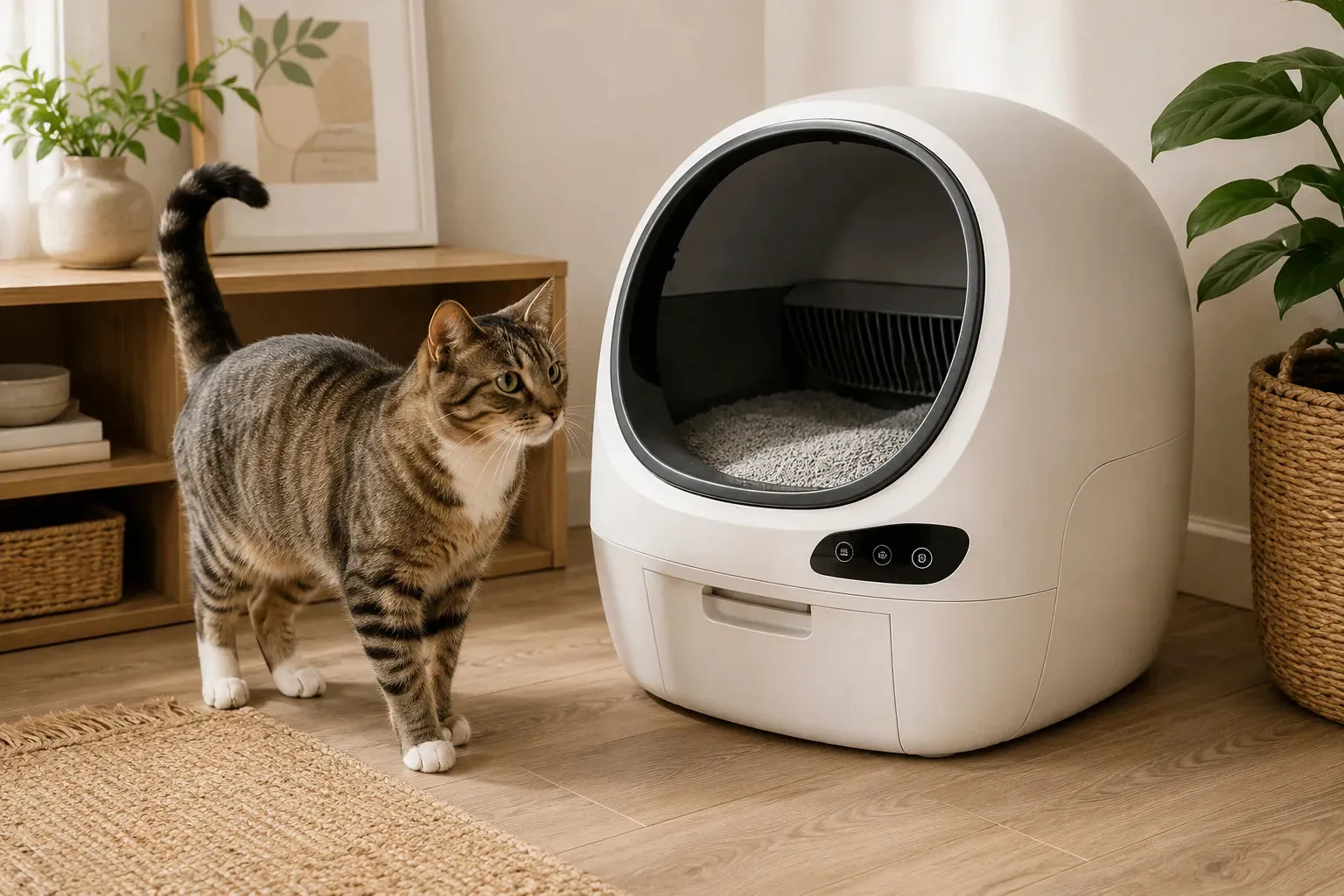
Scooping the litter box every day probably isn't your favourite chore. So the idea of handing part of that job to a self-cleaning litter box can be tempting.
But when a model costs several hundred dollars, one question comes up: is the investment worth it?
These devices can cut down on daily scooping, but they still need some maintenance and don't suit every cat. Before buying one, it's best to know their advantages, their limits and the criteria to check to choose a model that suits your cat.
In this article
- How does a self-cleaning litter box work?
- Is a self-cleaning litter box really worth the price?
- Is this type of litter box right for your cat?
- What should you check before choosing a model?
- How do you check reliability?
- How do you get your cat used to its new litter box?
- A few models to consider
- Frequently asked questions
How does a self-cleaning litter box work?
A self-cleaning litter box removes waste automatically after the cat has used it. Depending on the model, a sifting, rotating or raking system separates the waste from the clean litter before dropping it into a waste compartment.
Sensors detect the cat's presence and the cleaning cycle starts after it leaves, usually after a set delay.
Is a self-cleaning litter box really worth the price?
A self-cleaning litter box takes care of removing waste, but it doesn't completely free you from looking after the box.
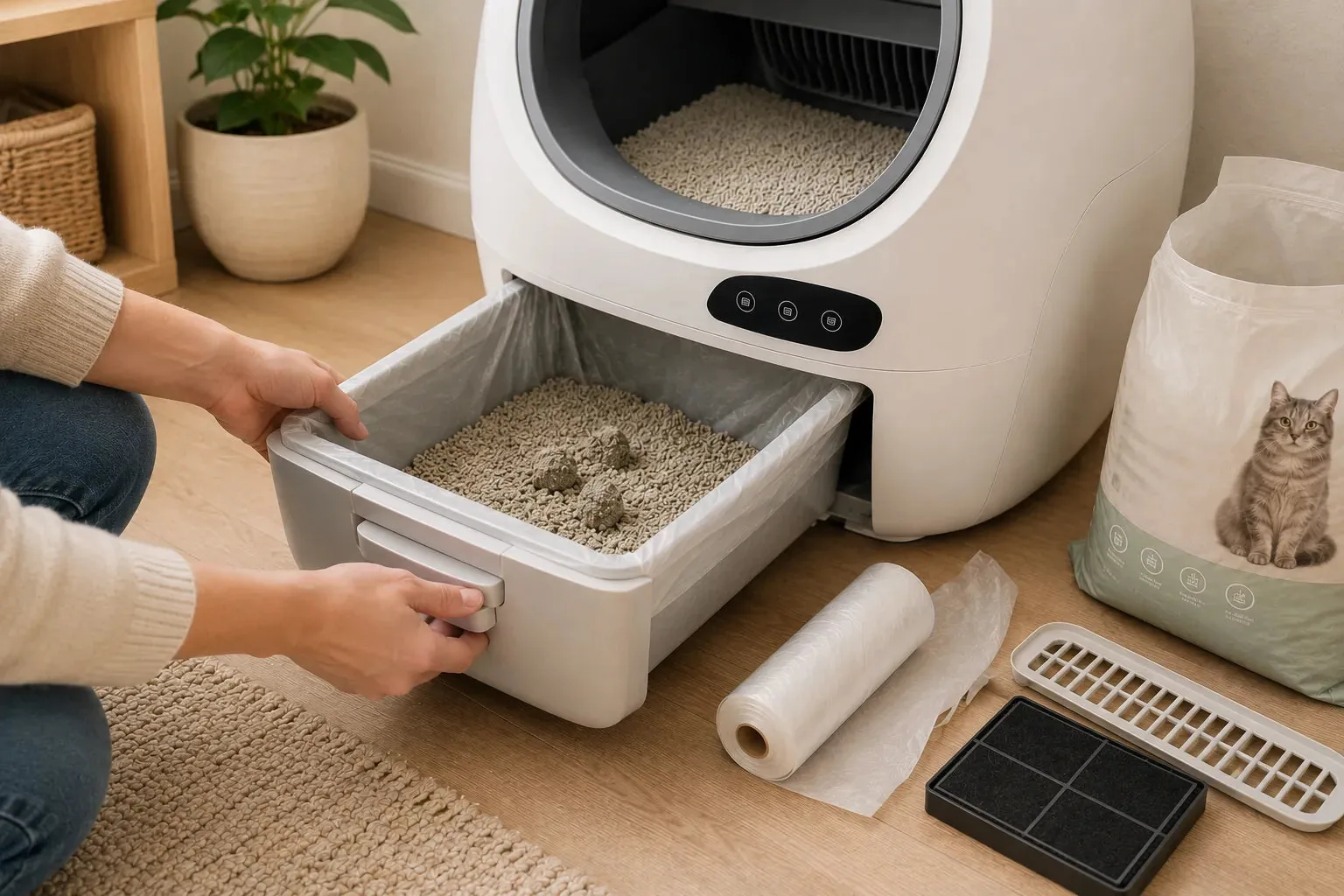
You'll still need to add litter, empty the waste compartment and clean the device. Depending on the model, you'll also need to budget for bags, filters or other consumables.
Before spending several hundred dollars, ask yourself above all: what problem are you trying to solve?
- You want to avoid scooping every day? That's exactly the task the device automates.
- You have several cats and the boxes get dirty fast? It can reduce part of the maintenance work.
- You mostly want to reduce odours? Removing waste faster can help, but the result also depends on the type of litter, the waste compartment and how well it's maintained.
- You hope to barely have to deal with the box anymore? A self-cleaning litter box is likely to disappoint you.
Is this type of litter box right for your cat?
The time saved doesn't really matter if your cat refuses to use its new box.
- Its size: look at the interior dimensions and the opening, not just the device's dimensions. Your cat needs enough room to get in, turn around and do its business comfortably.
- Its age and weight: for a kitten, follow the limits set by the manufacturer. Some devices require a minimum weight to use the automatic cycle safely.
- Its mobility: a high or hard-to-reach entrance may suit a senior cat or one with mobility issues less well.
- Its temperament: the noise and movement of the cleaning cycle can worry a fearful cat. In that case, choose a quiet model.
- Its habits: if your cat prefers a large open box, switching straight to a more enclosed, less spacious device may require more adjustment time.
What should you check before choosing a model?
| Criterion | What to check |
|---|---|
| Safety | Detection and stop systems that keep the cycle from starting, or interrupt it, if the cat is in or near the device. |
| Dimensions | The interior space and opening must be large enough for your cat to get in, turn around and use the box comfortably. |
| Minimum weight | The weight limits set by the manufacturer, especially if you have a kitten. |
| Litter type | Compatible litters and any restrictions set by the manufacturer. |
| Maintenance | The parts to clean, how easy it is to take apart and the recommended cleaning frequency. |
| Waste compartment | Its capacity and how often you'll need to empty it. |
| Noise | The noise level during the cycle, especially if your cat is sensitive to sounds. |
| Consumables | The bags, filters or other products to replace and their cost. |
| Warranty | How long the warranty lasts and what it covers. |
Price and connected features can then help decide between models that meet your criteria.
How do you check reliability?
A self-cleaning litter box may work well at first, but its reliability is also judged over time. Sensors and motors in particular can fail.
Before buying, look into:
- problems that come up repeatedly in reviews;
- the availability of replacement parts;
- customer service;
- the return policy if your cat refuses to use the device.
For a device at this price, it's best to know who to turn to if it breaks down.
How do you get your cat used to its new litter box?
Even if your cat uses its litter box without any problem, the shape or operation of the new device may make it wary. A gradual transition is best.
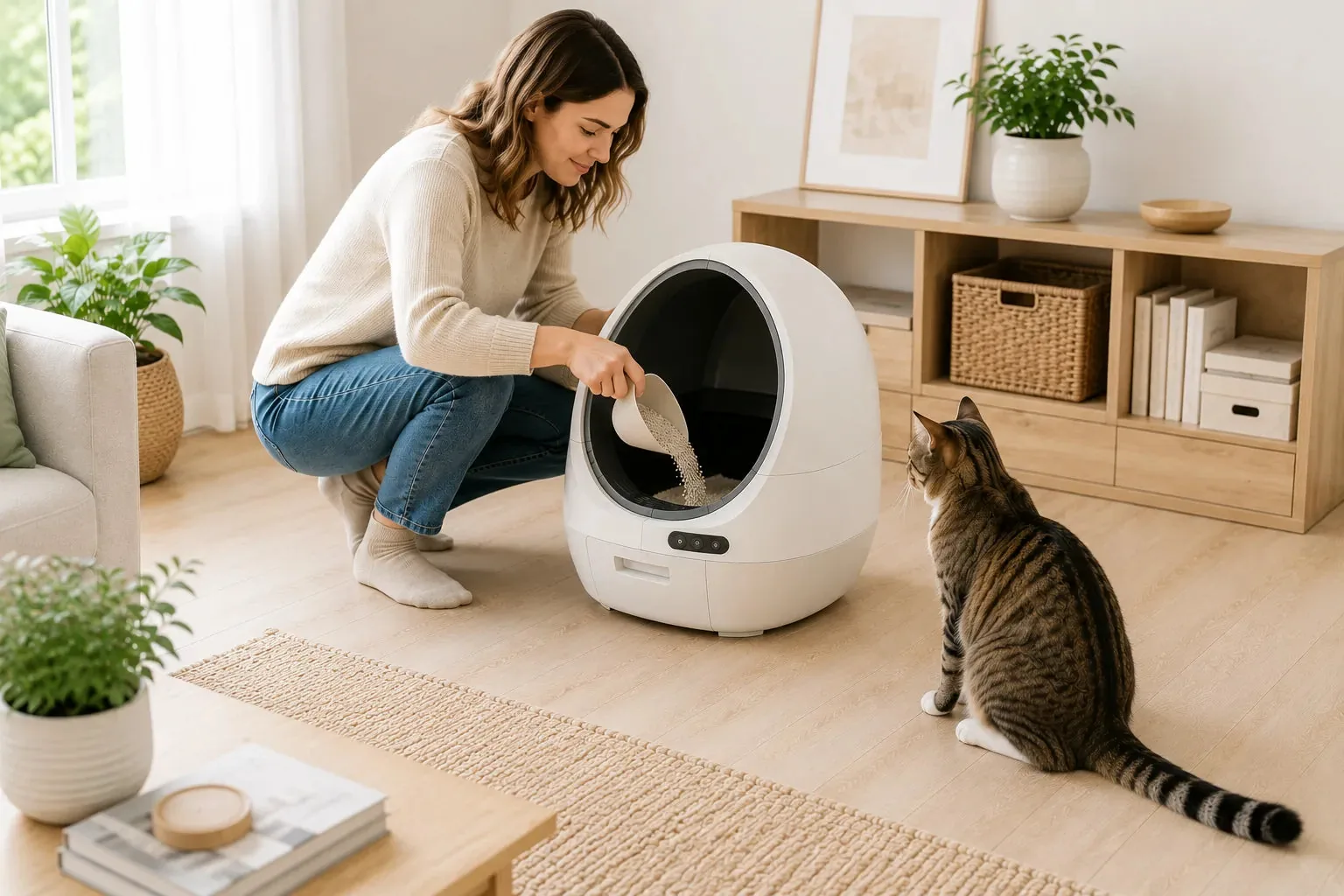
- Keep its old box while it gets used to the new one.
- Let it explore the new device at its own pace, without placing it inside or trying to hold it there.
- Use a litter it already knows, if it's compatible with the model you chose.
- Keep the automatic cycle turned off for the first few days, when the manufacturer recommends it, so it gets familiar with the box before hearing the mechanism run.
- Wait until it uses the new litter box regularly before considering removing the old box.
If your cat still hesitates, don't rush the transition. The location, the size of the box or the type of litter can also explain its hesitation.
A few models to consider
Among the self-cleaning litter boxes we looked at, we picked two models with different features.
Note: Poil & Museau has not tested these devices. The information presented comes from the manufacturers, published tests and user reviews.
Litter-Robot 4: a high-end option
The Litter-Robot 4 by Whisker is one of the best-known models. After the cat leaves, its rotating system separates the waste from the clean litter and drops it into a closed drawer, which reduces scooping and helps contain odours.
It works with clumping litter. Its app shows box usage, the waste drawer level and the cat's weight, among other things. According to Whisker, one unit can be used by up to four cats.
Replacement parts are available from the manufacturer. As with any automated device, it's still worth reading recent reviews before buying, especially those about how the sensors perform.
Consider it if: you're looking for a complete, connected device, especially for a home with several cats.
👉 See the Litter-Robot 4 and its features
Neakasa M1 Plus: a more open design
The Neakasa M1 Plus stands out for its open-top box, which gives the cat more room. This setup can be appealing if your cat is uncomfortable in an enclosed automatic litter box.
Its system automatically removes waste and sends it to a closed compartment. Sensors detect the cat's presence, while the app tracks box usage and the animal's weight. The M1 Plus works with a clumping litter whose granules meet the manufacturer's recommendations.
This design can, however, let some litter end up around the box.
Consider it if: your cat prefers more space when using its litter box.
👉 See the Neakasa M1 Plus and its features
Frequently asked questions
How long can you leave a self-cleaning litter box without emptying it?
It depends on the capacity of the waste compartment and the number of cats using the box. The manufacturer may give an approximate time frame, but it varies with use. In the first few days, watch how quickly it fills up.
Can you use any litter in a self-cleaning litter box?
No. Some devices work with clumping litter, while others require a specific type or grain size. Incompatible litter may not sift properly or may interfere with the mechanism. Check the manufacturer's recommendations.
Does a self-cleaning litter box eliminate odours?
Not completely. Removing waste quickly can limit odours, especially when it's dropped into a closed compartment. You still need to consider the type of litter used and clean the waste bin regularly.
Should you keep a regular litter box?
During the transition, yes. Your cat should be able to keep using its old box until it uses the new one regularly.
If you have several cats, don't automatically remove the other boxes just because you've installed a self-cleaning one. First watch how each cat reacts to the new device.
Key takeaways
A self-cleaning litter box can reduce scooping, but it doesn't eliminate box maintenance. Before investing in a device, make sure above all that it suits your cat and look into its reliability.
Even an excellent self-cleaning litter box won't be a good buy if your cat refuses to use it.
Read next
Sources
To write this article, we consulted PetMD's recommendations on self-cleaning litter boxes and tests by Cats.com. The features of the Litter-Robot 4 and the Neakasa M1 Plus were also checked with Whisker and Neakasa.