Is your cat drinking enough water? The signs to watch for
The signs to watch for, its daily needs and tips to encourage it.
Cats have a reputation for drinking little. Since they often hydrate in small sips, it's not always easy to know whether they're drinking enough. Yet a lack of water can harm their health.
How can you tell if your cat is drinking enough? Which signs should alert you? How can you encourage it to drink more?
Discover the signs to watch for, the factors that influence its water intake and the best ways to support good hydration.
Why do cats naturally drink so little water?
Cats descend from ancestors that lived in arid regions. Over the course of evolution, they developed the ability to cover part of their water needs through their prey.
Even though domestic cats no longer hunt for food, they've kept this trait. Their thirst reflex is weaker than dogs', which explains why they often drink small amounts throughout the day.
Diet also affects water needs. A cat that mainly eats wet food already takes in a good share of the water it needs at mealtimes. A cat fed mostly kibble, on the other hand, will need to drink more to meet its needs.
So drinking little isn't necessarily worrying. It's mostly sudden changes in its habits that deserve your attention. What matters most is that your cat gets enough water every day, whether by drinking or through its food.
How can you tell if your cat is drinking enough?
It's not always obvious whether a cat is drinking enough. Since it often drinks in small sips, its water intake easily goes unnoticed.
Its water needs vary with several factors:
- Its weight
- Its diet
- Its activity level
- The room temperature
- Its health
As a guide, a healthy adult cat needs about 50 to 60 ml of water per kilogram of body weight each day.
Daily water needs by weight
| Cat's weight | Approximate daily needs* |
|---|---|
| 3 kg (6.6 lb) | 150 to 180 ml |
| 4 kg (8.8 lb) | 200 to 240 ml |
| 5 kg (11 lb) | 250 to 300 ml |
| 6 kg (13.2 lb) | 300 to 360 ml |
| 7 kg (15.4 lb) | 350 to 420 ml |
*These values include the water it drinks and the water contained in its food.
A cat that mainly eats wet food will therefore drink less than a cat fed only kibble.
Rather than trying to measure every sip, watch its behaviour. If your cat eats normally, uses its litter box as usual and its water intake stays stable, it's probably well hydrated.
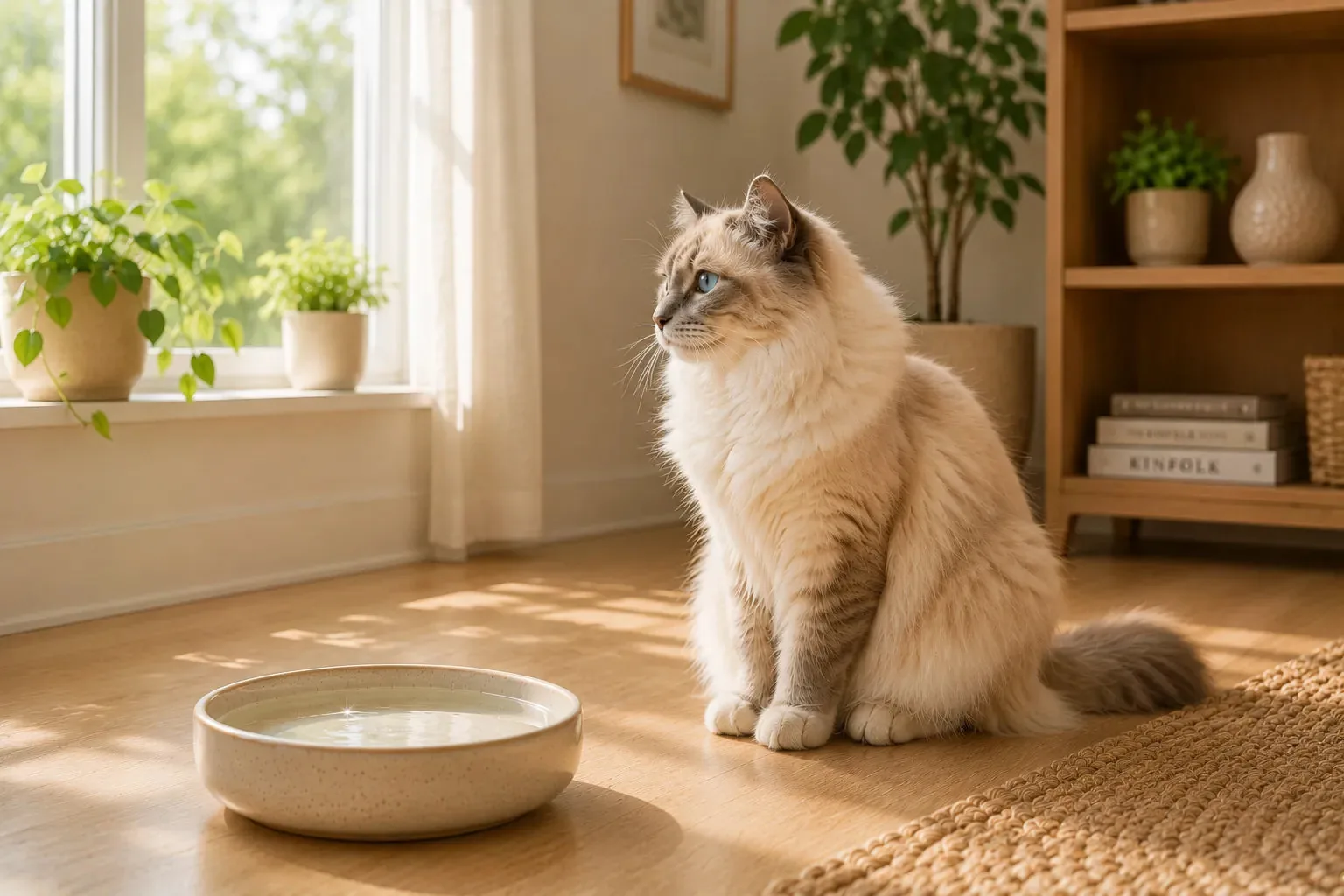
Signs that may indicate your cat isn't drinking enough
A cat rarely shows every symptom of dehydration at once. Instead, pay attention to changes in its habits, especially if several clues appear at the same time.
Here are the main things to watch:
- A drier litter box: your cat urinates less often or produces smaller amounts of urine.
- More concentrated or darker urine: this can indicate your cat isn't drinking enough.
- Drier or harder-to-pass stools: insufficient hydration can contribute to constipation.
- Lower energy: your cat sleeps more, plays less or seems less active.
- Loss of appetite: a cat that eats less may also drink less, which can make dehydration worse.
- Dry or sticky gums: in a well-hydrated cat, they're usually moist to the touch.
If your cat stops drinking entirely, shows several of these signs or its condition worsens quickly, see a veterinarian without delay.
Why isn't your cat drinking enough?
Several factors can explain why a cat drinks little. Some are linked to its preferences, while others may reveal a health problem.
The most common causes are:
- A diet made up mostly of kibble: unlike wet food, kibble contains very little water. Your cat therefore has to drink more to meet its needs.
- A poorly placed water bowl: some cats prefer their bowl away from their food or litter box.
- Unappealing water: stagnant or lukewarm water, or a dirty bowl, can discourage your cat from drinking.
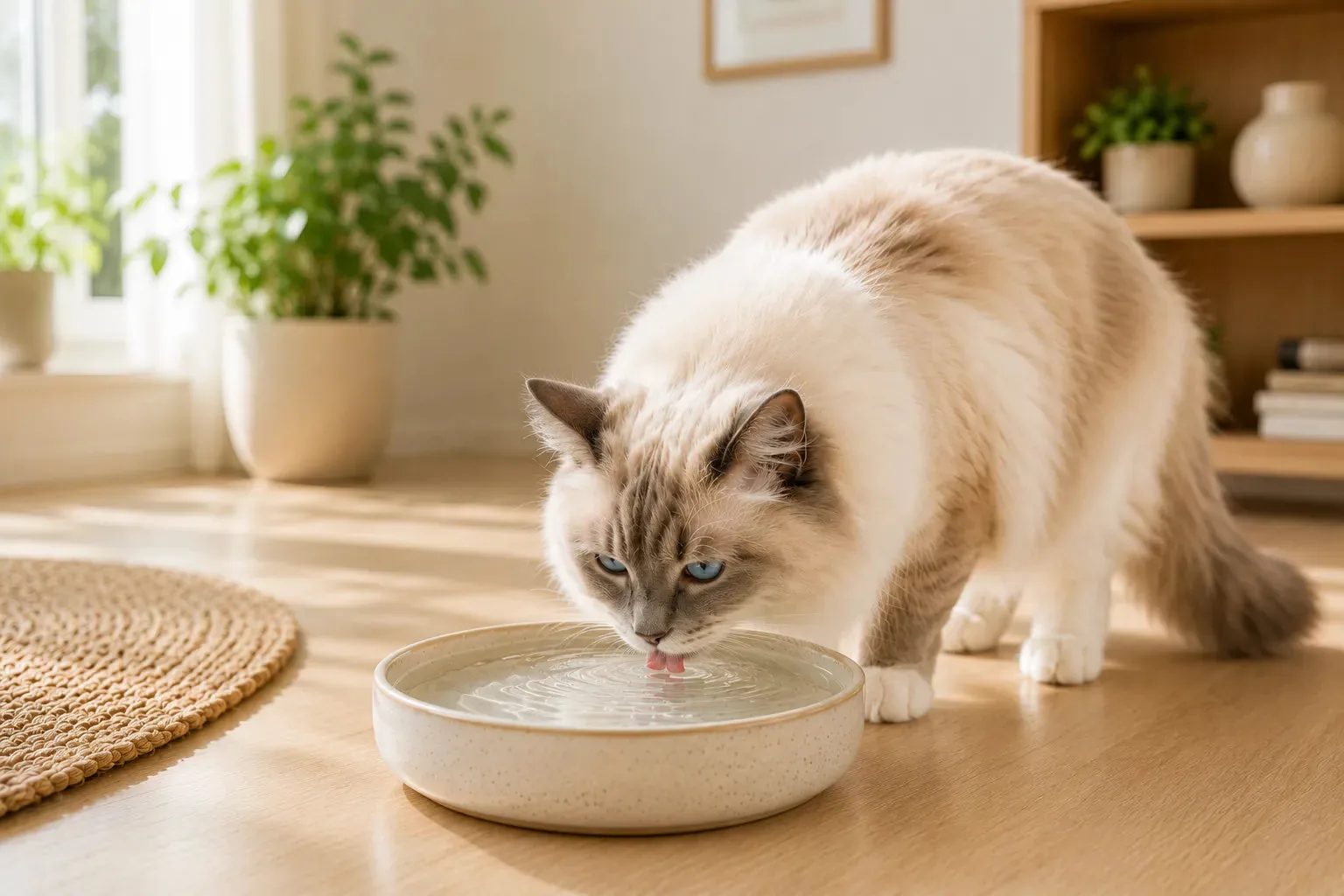
- Sensitive whiskers: some cats avoid narrow bowls because their whiskers constantly brush the edges. A wider, shallow bowl can be more comfortable.
- A health problem: pain, dental disease or other health issues can change its habits. If you notice a sudden or lasting change, see a veterinarian.
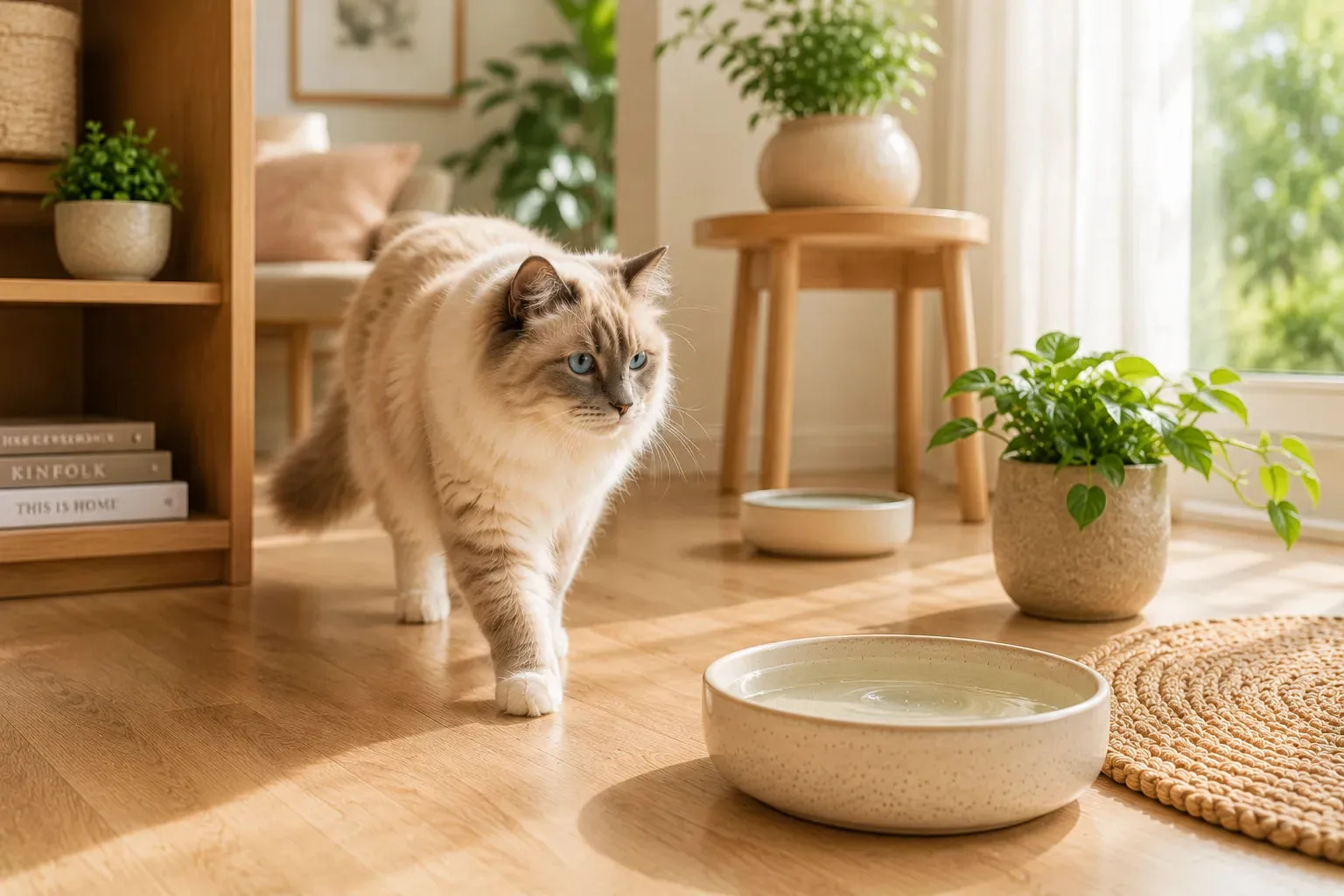
How to encourage your cat to drink more
There are several ways to get a cat to drink more water. Since every cat has its preferences, what works for one won't necessarily work for another.
You can:
- Set out several water bowls in different parts of the house so your cat has easy access.
- Refresh the water every day so it stays clean and fresh.
- Choose a wide, shallow bowl so its whiskers don't touch the edges.
- Keep the bowl away from food and the litter box, since many cats prefer to drink in a separate spot.
- Offer more wet food, if it suits its needs and your veterinarian's recommendations.
If your cat prefers moving water, a cat water fountain can encourage it to drink more often. Check out our complete guide to compare the different models and their advantages.
Frequently asked questions
My cat drinks very little. Is that normal?
Yes, some cats naturally drink little, especially if they mainly eat wet food. What matters is that they get enough water every day and that their habits stay stable.
Is a water fountain useful?
For many cats, yes. Moving water is often more appealing and can encourage your cat to drink more. It's important, though, to clean the fountain regularly and replace the filters as the manufacturer recommends.
My cat prefers drinking from the tap. Why?
Moving water naturally attracts some cats. They may also prefer cooler water or find the tap more interesting than a still bowl.
Why does my cat drink from the toilet?
Some cats are drawn to cool or moving water. A toilet bowl can seem more interesting than a bowl left in the same place all day. For hygiene and safety, it's best to keep the toilet lid closed and offer clean water refreshed daily, or a water fountain.
Is tap water good for my cat?
In most areas, yes. If your water is safe to drink, it's fine for your cat too.
My cat is drinking more than usual. Should I worry?
If your cat suddenly starts drinking much more than usual, it can be a sign of a health problem, such as kidney disease or diabetes. If this change persists or comes with other symptoms, see a veterinarian.
Before you go
A cat that drinks little isn't necessarily short on water. By watching its habits and staying alert to changes, you'll be able to spot the signs that call for a vet visit more quickly.
🐾 Read next
- Cat water fountain: plastic, ceramic or stainless steel?
- Dangerous foods for dogs and cats: the 10 to avoid
- Dog or cat poisoned: what to do quickly?
Sources
This article is based on recommendations and information published by veterinary organizations and recognized animal health sources, including International Cat Care, VCA Animal Hospitals and the Cornell Feline Health Center.