Cat water fountain: plastic, ceramic or stainless steel?
The differences between the three materials and how to choose an easy-to-clean fountain.
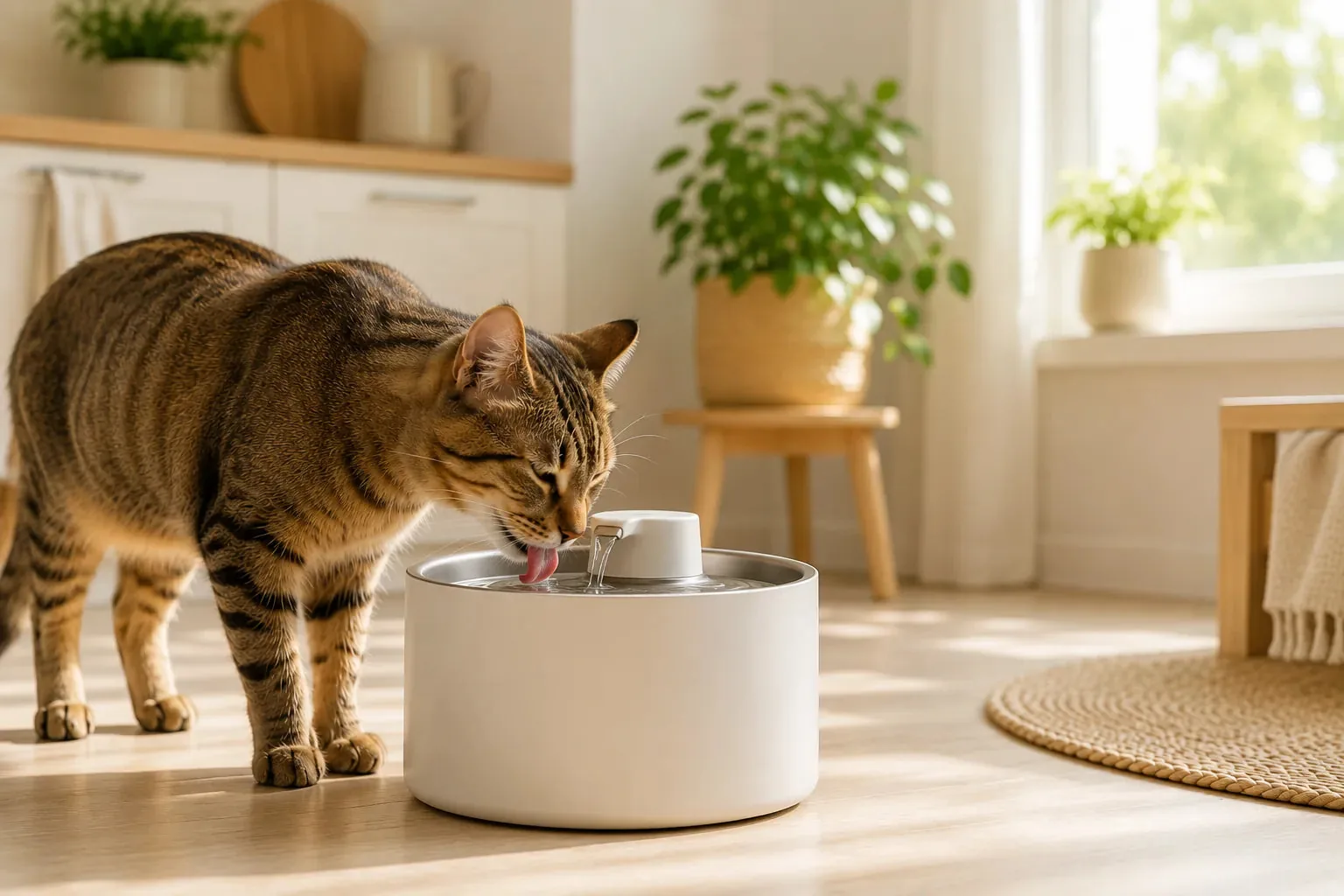
You've found a water fountain you like.
Then you notice it comes in plastic, ceramic or stainless steel.
The choice seems simple.
Yet the more you compare models, the more doubts creep in.
Is stainless steel a better choice?
Should you avoid plastic?
Is ceramic worth the price difference?
The material matters, but it isn't enough on its own to make a good choice. Build quality, ease of cleaning and filter availability also deserve your attention.
Does the material really make a difference?
Yes, but it's not the only factor to consider.
An easy-to-clean fountain that's maintained regularly will always be a better option than a model that's hard to take apart or wash, whatever the material.
Each material has advantages and limits. The difference mostly shows in maintenance, wear resistance and durability.
Prefer stainless steel? See the fountain we selected
That's also why feline acne often comes up when people talk about water fountains.
Feline acne, biofilm and hygiene
Feline acne most often shows up as small blackheads or scabs on the chin.
It can be linked to various factors, and it's not always possible to identify the exact cause.
Plastic is sometimes blamed when this topic comes up, because its surface can get scratched over time. These small scratches can trap more residue and make cleaning harder.
Keeping the fountain clean is just as important.
💡 Did you know?
Biofilm is a thin film that can form inside a bowl or water fountain.
Even when it looks clean at first glance, a fountain can build up residue on its walls, in its corners or inside the pump.
Regular cleaning helps limit biofilm, whatever the material.
Plastic, ceramic or stainless steel: what are the differences?
Plastic fountain
Strengths
- More affordable price
- Wide choice of models
- Lightweight
To consider
- Can get scratched over time
- Sometimes a shorter lifespan
- Cleaning needs closer attention
If you're looking for a plastic fountain, choose a good-quality model whose parts come apart easily for cleaning.
Ceramic fountain
Strengths
- Easy-to-clean surface
- Good stability
- Polished look
To consider
- Heavier
- Can break if dropped
- Sometimes a more limited choice
A ceramic fountain is a good fit if you want a stable model whose parts are easy to clean.
Stainless steel fountain
Strengths
- Very durable
- Easy-to-clean surface
- Resists wear well
To consider
- Sometimes a higher price
- Some components may be plastic
- A more limited choice of models depending on the brand
A stainless steel fountain is a good fit if you want a model that's easy to take apart and whose replacement filters are easy to find.
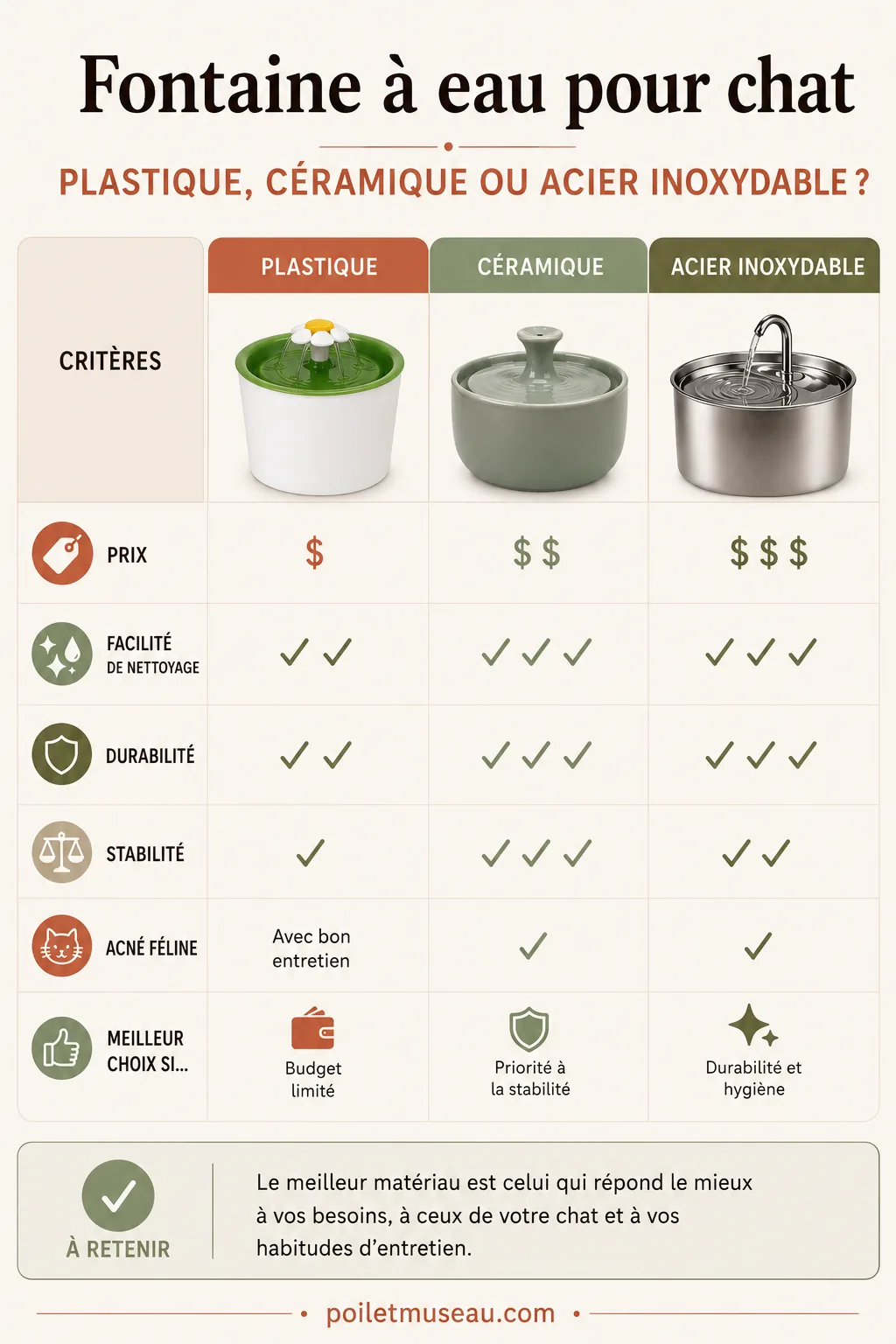
Which material should you choose?
📥 Download this free cheat sheet (in French)
Before buying a water fountain, also check these points
Some features deserve your attention:
- How easy it is to take apart for cleaning
- The availability and cost of compatible replacement filters
- The pump's noise level
- The reservoir capacity
- The fountain's stability
- The availability of replacement parts
- Plastic components inside the system
These details are easy to miss when buying, but they can make a big difference after a few weeks or months of use.
A few myths about water fountains
A stainless steel fountain contains no plastic
Not necessarily. Even when the reservoir is made of stainless steel, the pump or some internal components may be plastic.
The filter replaces cleaning
No. The filter helps trap some impurities, but it doesn't replace regular cleaning of the fountain.
All cats prefer a water fountain
Every cat has its habits. While one will quickly adopt a fountain, another will keep preferring its usual water bowl.
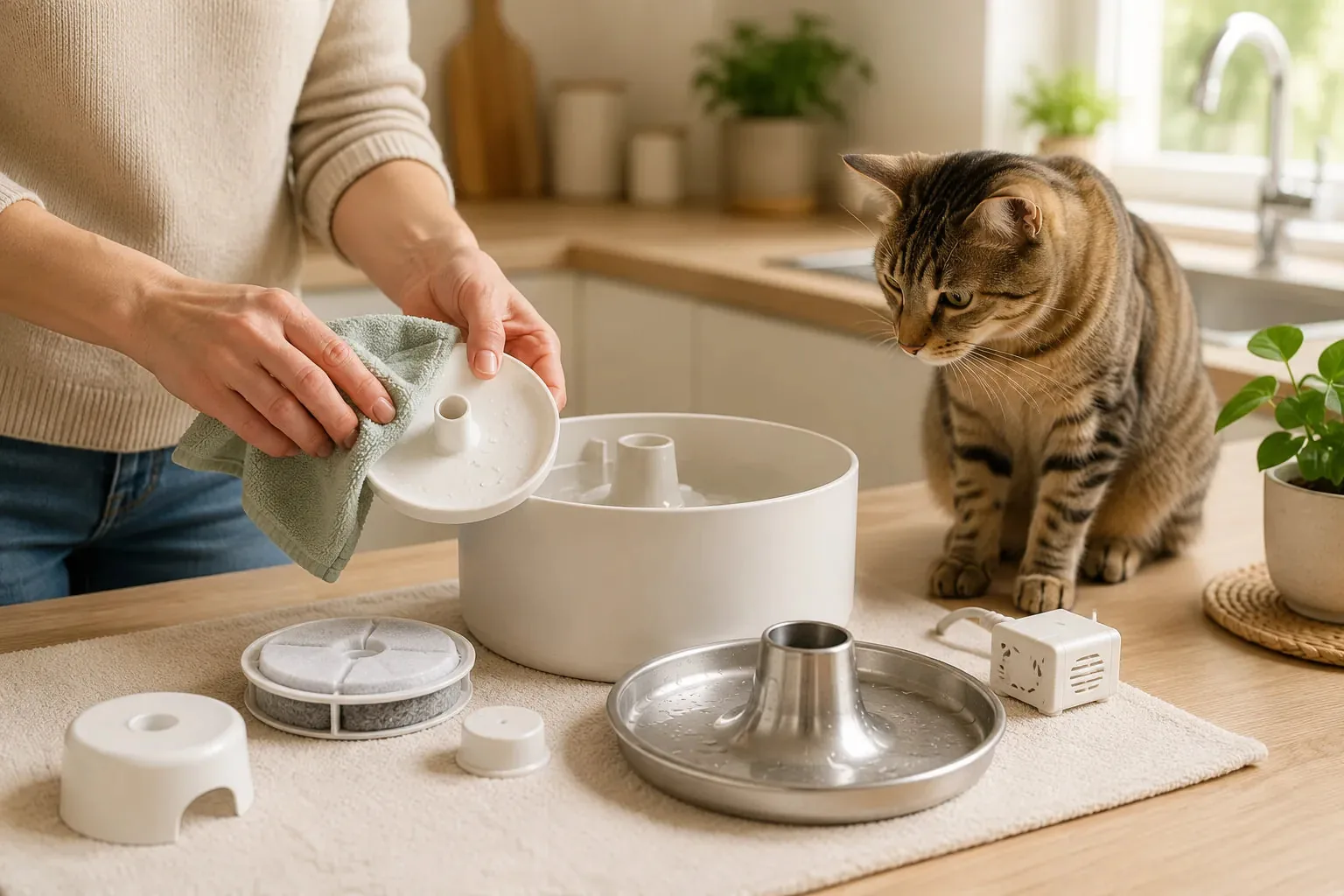
How often should you clean it?
To limit the buildup of residue and biofilm:
- Rinse the accessible components every few days.
- Do a full cleaning about once a week.
- Check the pump's condition while cleaning.
- Replace filters according to the manufacturer's recommendations.
Whatever material you choose, regular maintenance is still the best way to give your cat clean water.
When should you replace it?
A well-maintained water fountain can last many years.
Sometimes, though, a replacement is needed.
Here are a few signs to watch for:
- Cracks or breakage
- Deep scratches that are hard to clean
- A pump that no longer works properly despite maintenance
- Replacement parts that can't be found
- Persistent deposits that come back quickly despite a full cleaning
When in doubt, it's better to replace a very worn fountain than to keep using a model that has become hard to clean properly.
Key takeaways
The best choice is the one that best meets your needs, your cat's needs and the time you want to spend on maintenance.
Whatever material you choose, regular maintenance remains the best way to keep the fountain clean and the water good quality.
Comparing materials, design and the availability of replacement parts before buying can save you a lot of disappointment later.
Read next
- The essentials for your cat
- Common cat behaviours
- What your cat's stare means depending on the situation
Sources
To write this article, we consulted veterinary and scientific resources on cat hydration, the hygiene of bowls and water fountains, and the materials used to make them.
The information presented is based in particular on recommendations from VCA Animal Hospitals, International Cat Care and on scientific publications available through the National Library of Medicine (PubMed Central).