Grooming your dog at home: the complete guide
Supplies, steps and tips for the coat, nails, ears and paw pads.
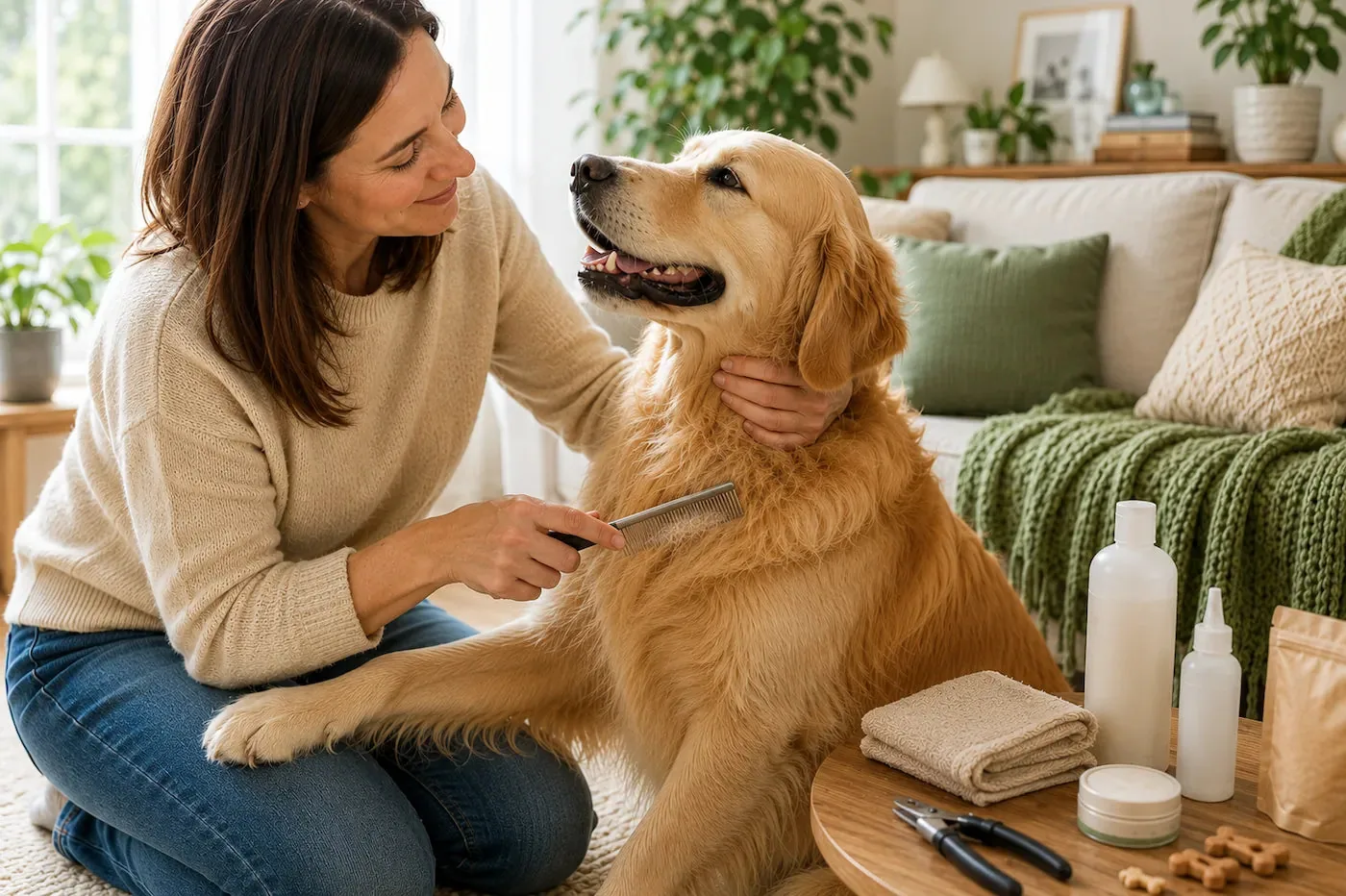
Grooming isn't only about keeping your dog clean. It also helps you care for its coat, check the condition of its skin and look at its ears, nails and paw pads. Session after session, these gestures become a pleasant moment to share with it.
You don't need to be a professional groomer to handle basic care at home. With the right tools and a gentle approach, it's entirely possible to maintain your dog between appointments… or even groom it yourself when its coat type allows.
In this guide, discover the supplies to have on hand, the steps to follow and tips for grooming your dog at home.
Why is grooming important?
Beyond appearance, grooming plays a role in your dog's well-being. Done regularly, it helps preserve skin health and coat quality, while letting you spot small changes quickly.
Spot a problem quickly
While brushing or bathing, take a few moments to look over your dog. You might notice:
- redness
- a small lump
- a tick
- irritation
- a cut
- a tangle starting to form
The earlier a problem is detected, the easier it is to act at the right time.
Improve its comfort
Regular grooming helps:
- remove dead hair
- limit tangles
- keep the coat clean
- keep nails at a comfortable length for walking
Strengthen your bond
By respecting its pace and rewarding its cooperation, grooming can become an enjoyable moment to share. Over the sessions, your dog gradually gets used to being handled and gains confidence, including at the vet or groomer.
Can you really groom your dog at home?
Yes, it's entirely possible to handle basic care at home. Brushing, bathing, cleaning the ears, caring for paw pads and trimming nails are all things you can learn gradually.
Every dog has different needs
Needs vary with the length and texture of the hair, whether there's an undercoat, and the breed. A Labrador, a Poodle and a Husky, for example, don't need the same upkeep. The table below shows the main coat types and recommended care.
| Coat type | Recommended care |
|---|---|
| Smooth coat (Beagle, Boxer, Doberman) | Weekly brushing to remove dead hair and keep the coat clean. |
| Short coat with undercoat (Labrador, German Shepherd) | Regular brushing, especially during shedding season, to remove loose undercoat. |
| Medium-length coat (Border Collie, Golden Retriever) | Regular brushing to prevent tangles, paying extra attention behind the ears, under the armpits and on the back of the legs. |
| Long coat (Shih Tzu, Yorkshire Terrier, Lhasa Apso) | Thorough brushing to prevent tangles. Professional grooming can be useful depending on the desired cut. |
| Curly coat (Poodle, Bichon Frise) | Frequent brushing and regular trims to prevent tangles and matting. |
| Wire coat (Schnauzer, Fox Terrier) | Regular brushing. Depending on the breed, hand-stripping may be recommended rather than clipping. |
Can't find your dog's coat type in this table? Ask your veterinarian, groomer or breeder. They can advise you on which tools to use and how often to groom.
When should you call a professional?
Grooming at home is a great way to maintain the coat between groomer appointments. For dogs with simpler upkeep, it can even meet all their needs, as long as you use the right tools and techniques.
However, it's best to see a professional if your dog has:
- very tight mats
- irritated or injured skin
- very long nails
- behaviour that makes grooming difficult
The goal isn't to replace a groomer, but to give your dog regular care in an environment where it feels confident.
✔️ Before you start
- Choose a quiet, well-lit spot.
- Keep all your supplies within reach.
- Reward your dog throughout the session.
- Take breaks if your companion shows signs of discomfort.
- If grooming is new to it, keep sessions short.
The supplies you'll need
Get all your supplies ready before you start to keep the session calm and smooth.
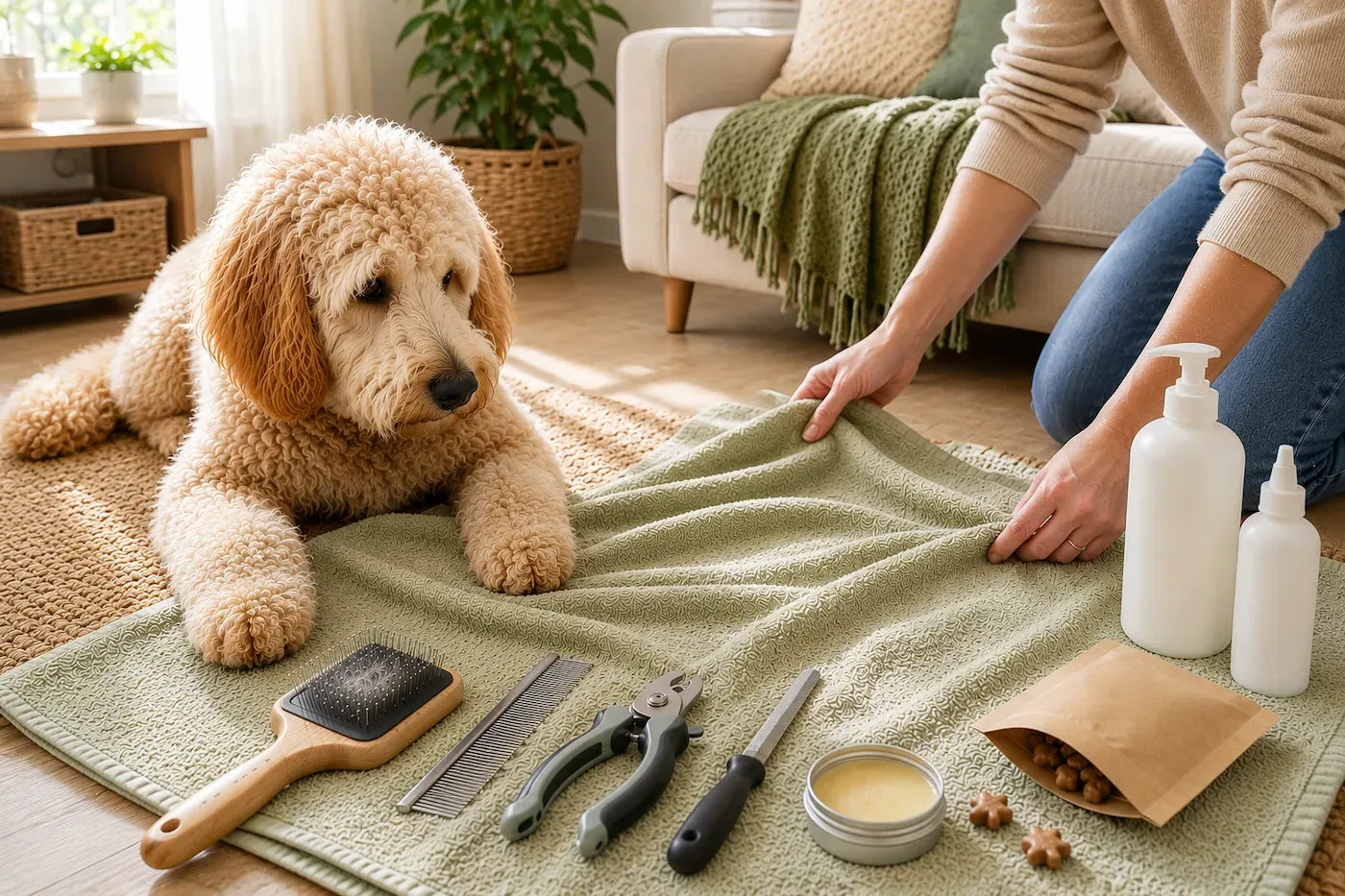
| Supply | What is it for? |
|---|---|
| A brush chosen for the coat | Removes dead hair, helps prevent tangles and keeps the coat in good condition. |
| A comb | Helps check that no tangles remain, especially behind the ears, under the armpits and on the back of the legs. |
| A dog shampoo | Cleans the coat while respecting the skin's natural balance. |
| A microfibre bath towel | Makes drying after the bath easier and absorbs much of the water. |
| A nail clipper or file | Helps keep nails at a comfortable length. |
| An ear cleaner | Helps clean the visible part of the ear. |
| Treats | Encourage your dog throughout grooming and help it associate this moment with a positive experience. |
No need to buy everything at once
You don't need to buy everything for the first session. A brush, a dog shampoo, a towel and a few treats are enough for basic care. You can add to your kit over time based on your companion's needs. It's better to invest in a few quality accessories than to pile up products that don't suit its coat type.
The steps for a successful grooming session
Following this order makes grooming easier and your dog is less likely to feel stressed.
🐾 The recommended order
- Brush the coat
- Give a bath (if needed)
- Dry thoroughly
- Clean the ears
- Trim the nails
- Check the paw pads
- Reward your dog
Step 1: Brush the coat
Why?
Brushing removes dead hair, helps work out small tangles and makes bathing easier when it's needed.
How?
- Always brush in the direction of hair growth.
- Work in small sections.
- Pay extra attention behind the ears, under the armpits, between the legs and under the collar.
- If you find a tangle, hold the hair at the base before gently working it out.
Avoid
❌ Pulling on a tangle.
❌ Using scissors to cut it out.
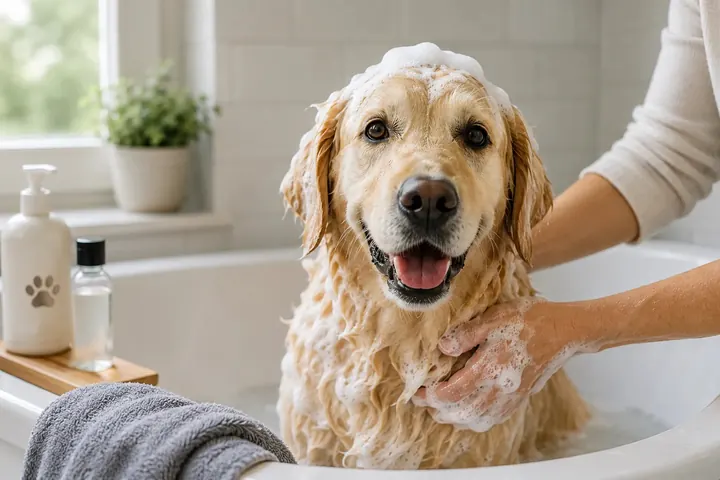
Step 2: Give a bath
Why?
A bath removes dirt, odours and residue built up in the coat.
How?
- Use lukewarm water.
- Wet the coat gradually.
- Avoid the eyes and the inside of the ears.
- Gently massage in the shampoo.
- Rinse thoroughly until the water runs clear.
Avoid
❌ Using human shampoo.
❌ Leaving shampoo residue.
Step 3: Dry the coat
Why?
A damp coat can encourage irritation, especially in dogs with long hair or an undercoat. Drying well also helps prevent tangles.
How?
- First blot the coat with a clean towel, without rubbing hard.
- If your dog accepts it, use a dryer on low heat and low power.
- Keep the dryer moving and at a safe distance from its coat.
- Make sure the coat is fully dry, especially under the armpits, between the legs and under the belly.
Avoid
❌ Using very hot air.
❌ Leaving the undercoat damp.
Step 4: Clean the ears
Why?
Occasional cleaning helps remove visible dirt and lets you check that the ears are in good condition.
How?
- Use a cleaner made for dogs.
- Apply the cleaner following the manufacturer's instructions.
- Gently massage the base of the ear.
- Wipe only the visible part with a pad or cotton ball.
Avoid
❌ Inserting a cotton swab into the ear canal.
❌ Cleaning an ear that's red, painful or smells bad without asking a veterinarian.
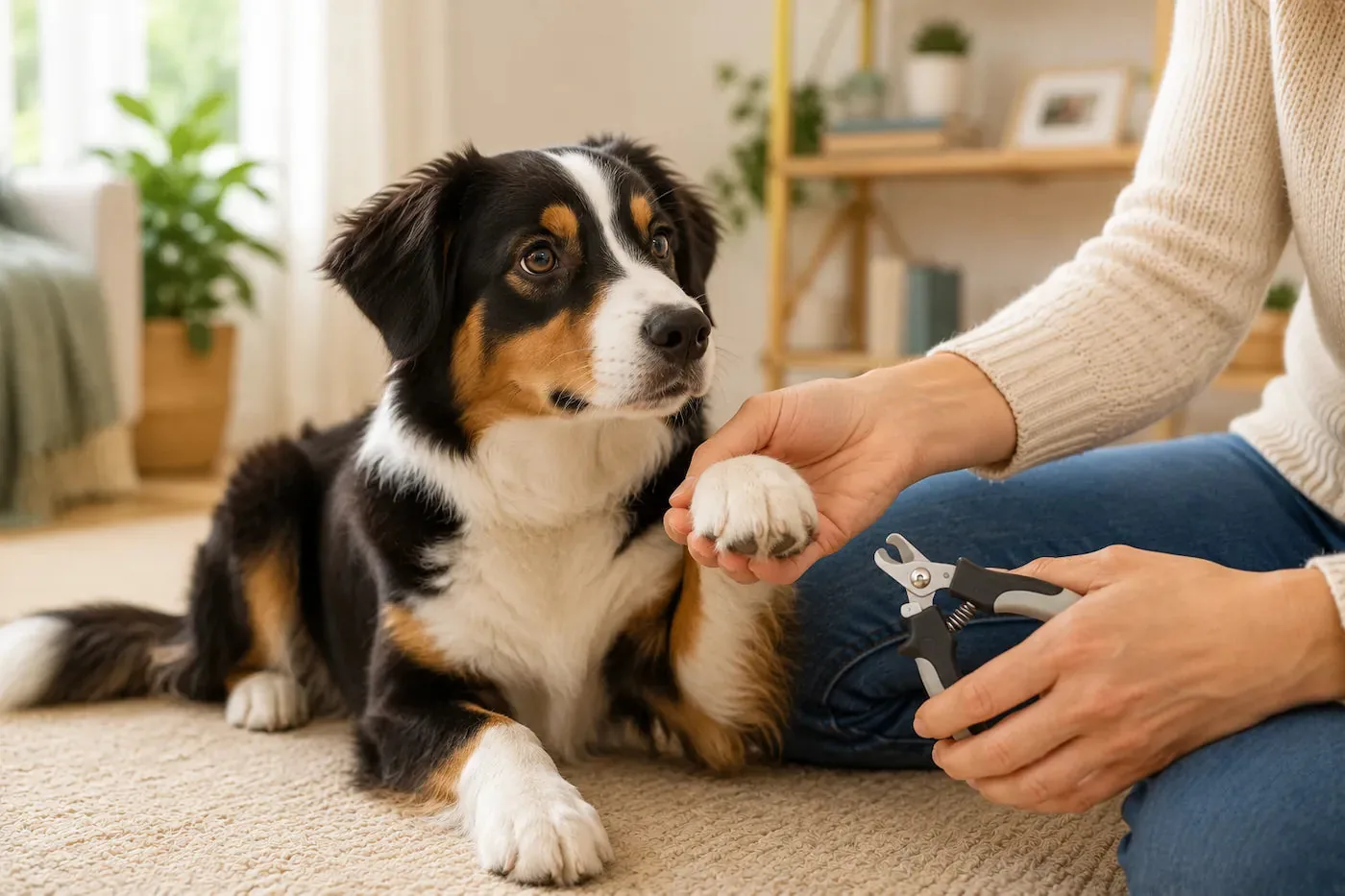
Step 5: Trim the nails
Why?
Nails that are too long can affect your dog's gait and become uncomfortable.
How?
- Use a nail clipper or file made for dogs.
- Trim a small amount at a time.
- Reward your dog after each paw if needed.
- If you're unsure, ask your veterinarian or groomer to show you the technique.
Avoid
❌ Cutting off a large part of the nail at once.
❌ Continuing if your dog becomes very stressed.
Step 6: Check the paw pads
Why?
Paw pads take a beating all year round. Inspecting them regularly helps you quickly spot an injury or a foreign object.
How?
- Check each pad, including between the toes.
- Remove small debris stuck in the hair.
- Look for cracks, cuts or redness.
- If they're dry, apply a dog paw pad balm.
Avoid
❌ Using a cream made for humans.
❌ Ignoring a deep cut or a bleeding pad.
Step 7: Reward your dog
Why?
Ending on a positive note helps your dog associate grooming with a pleasant moment. It will approach the next sessions with more confidence.
How?
- Offer a treat, a toy or some petting, depending on what your dog prefers.
- Praise it in a calm voice.
- Take a few minutes to play or go for a walk together, if the timing is right.
Mistakes to avoid
Even with the best intentions, some mistakes can make grooming harder or uncomfortable for your dog. By avoiding them, care will be more pleasant and safer.
Trying to do everything in one session
If grooming is new to your dog, there's no need to do everything in the first session. Spread care out over several short sessions instead.
Using products made for humans
A dog's skin pH is different from ours. Always use products made for dogs, such as shampoo, ear cleaner or balm.
Bathing too often
Bathing too frequently can strip the natural oils that protect the skin and coat. Unless your veterinarian recommends otherwise, it's best to wash your dog only when it needs it.
Forcing a worried dog
If your companion shows signs of stress, take a break and try again later. A negative experience can make future sessions harder.
Neglecting small tangles
A small tangle is much easier to remove than a well-established one. Regular brushing keeps them from becoming hard to work out.
Forgetting to dry the coat well
Moisture held in the coat, especially in dogs with a dense undercoat or long hair, can encourage irritation and tangles.
How often should you groom your dog?
There's no single frequency that suits every dog. Coat type, lifestyle, season and even your companion's age influence the care it needs.
Observe your dog regularly. More frequent brushing during shedding season, a bath after a messy outing or a paw pad check after a walk are all good habits.
Here's an overview of recommended frequencies for the main types of care.
| Care | Recommended frequency |
|---|---|
| Brushing | Depends on the coat type. Long, curly or double coats need more frequent brushing. |
| Bath | As needed, when it's dirty or smells. |
| Ear cleaning | Inspect them regularly and clean only when needed or as your veterinarian recommends. |
| Nail trimming | When the nails touch the ground or get too long. |
| Paw pad check | After walks and on a regular basis. |
The most important thing isn't to follow a schedule to the letter, but to stay attentive to your dog's needs. A simple, regular routine helps keep its coat, skin, nails and paw pads healthy.
In short
- Grooming helps preserve your dog's comfort, well-being and health.
- Choose tools based on its coat type.
- Follow the steps in the right order to make grooming simpler and more pleasant.
- Take your time and reward your dog throughout.
- If in doubt or if you run into difficulty, don't hesitate to consult your veterinarian or a professional groomer.
🐾 Read next
Keep reading with these related articles:
- Dog paws in summer: how to prevent burned paw pads
- Heatwaves and dogs: how to help your dog stay cool
- Why do dogs sniff so much on walks?
Sources
The information in this article is based on recommendations from recognized veterinary and animal care references, including the American Kennel Club (AKC), the American Veterinary Medical Association (AVMA), VCA hospitals and the ASPCA.