How to choose the right bed for your dog
The right size, the right model and the criteria to check before you buy.
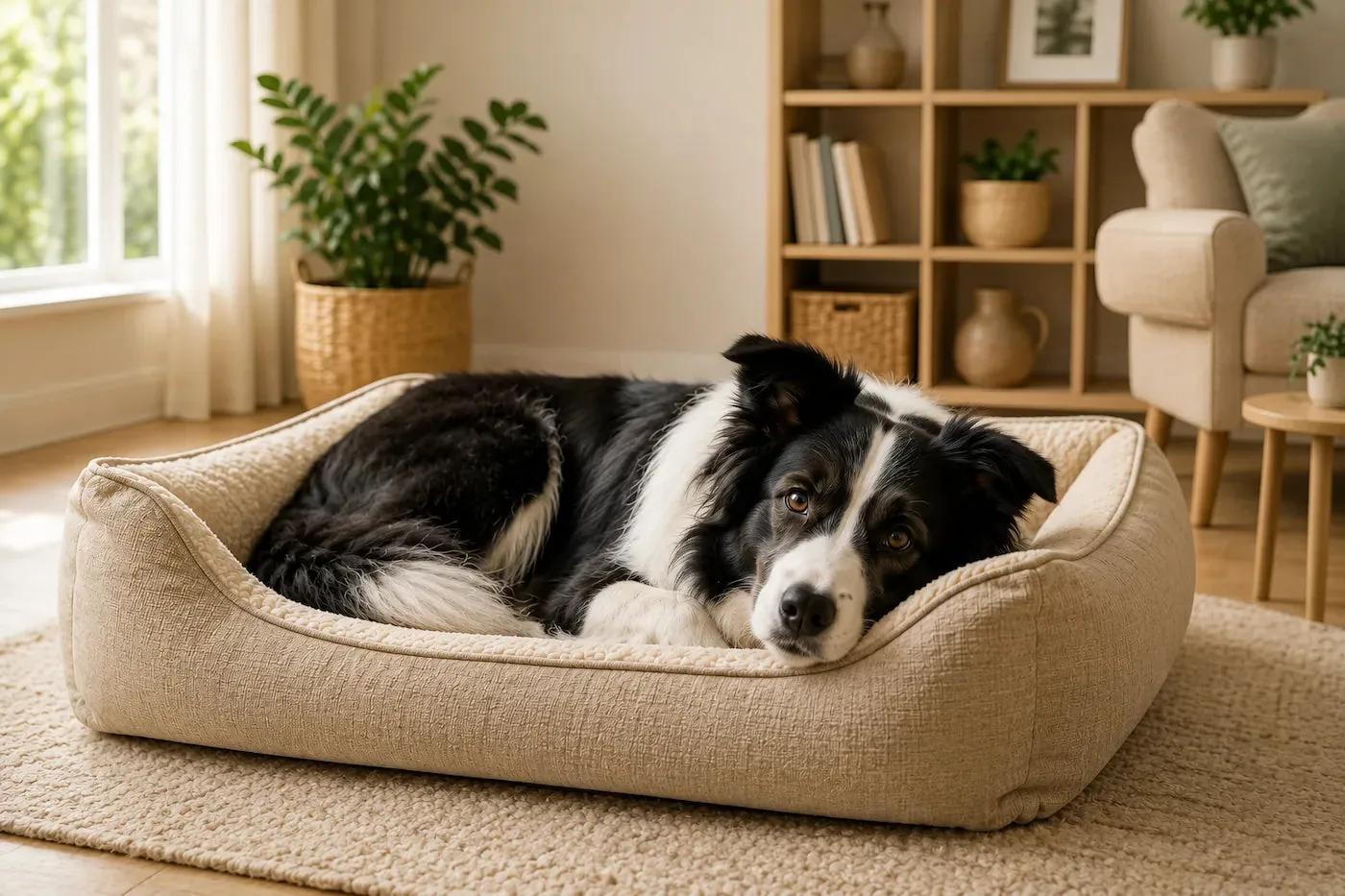
Does your dog ignore its new bed to sleep on the floor? Does it spend its days on the couch despite the cushion you bought it? This is quite common.
Choosing a bed isn't just about comparing models. Your dog's age, size, sleeping style, health and resting habits all influence which type of bed will suit it best.
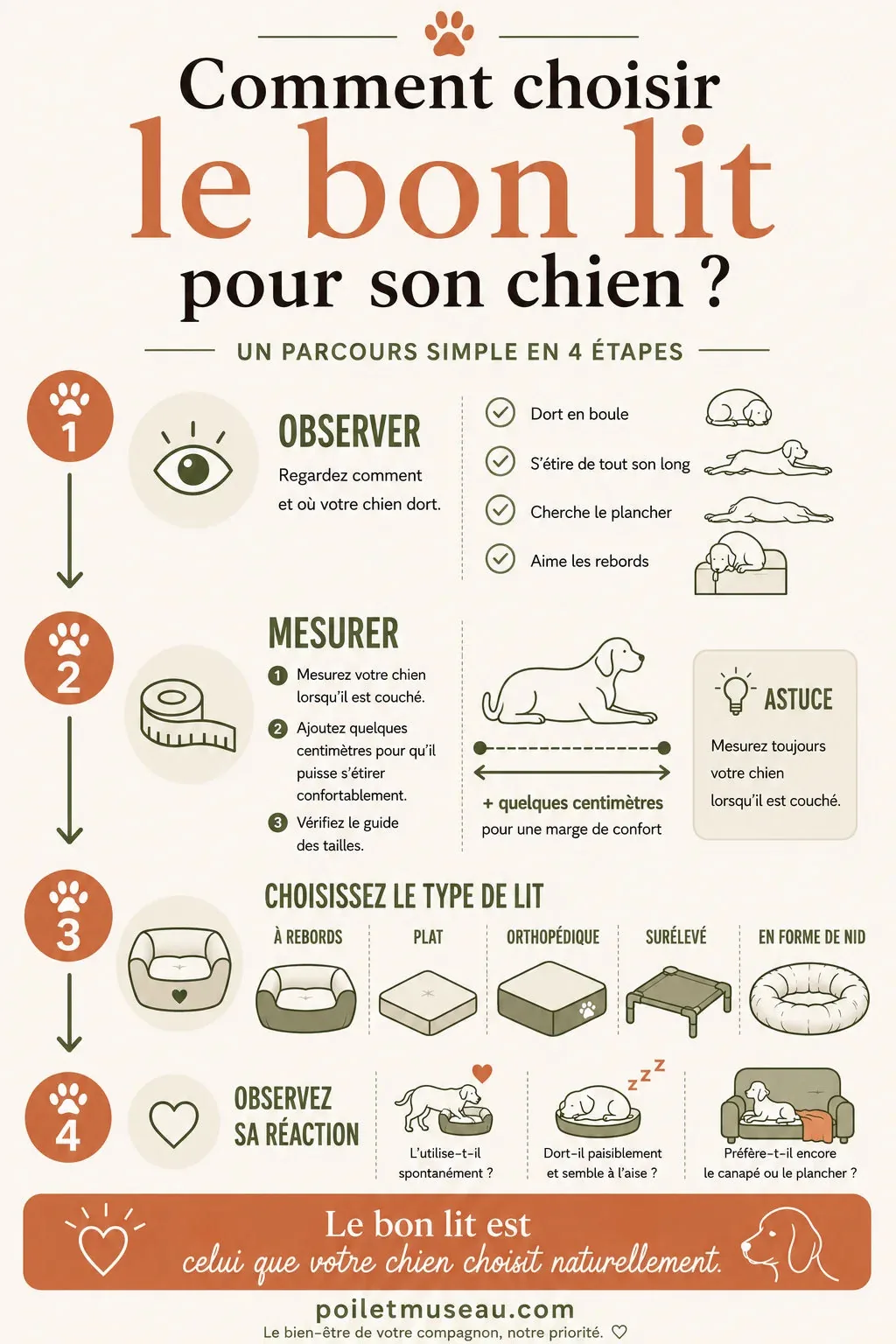
Before buying, take time to watch how it rests. A dog that sleeps curled up, looks for a cool spot or likes to lean against an edge won't have the same needs as one that stretches out full length.
A few minutes of observation can save you a disappointing purchase, wasted money… and a bed that ends up forgotten in a corner of the house.
Observe first, choose second
Before you even compare models, watch how it sleeps and which spots it prefers. This will help you choose a bed that suits it.
Here are a few questions to ask yourself:
- Does it sleep curled up or fully stretched out?
- Does it look for a cool spot when it's hot?
- Does it like to lean against a wall, furniture or a cushion?
- Does it often change spots during the day?
- Does it prefer to sleep near you or in a quiet corner?
- Does it already ignore its bed for the couch or the floor?
These answers will point you toward a model that better meets its needs. They'll often tell you more than a product listing.
The first thing to check: size
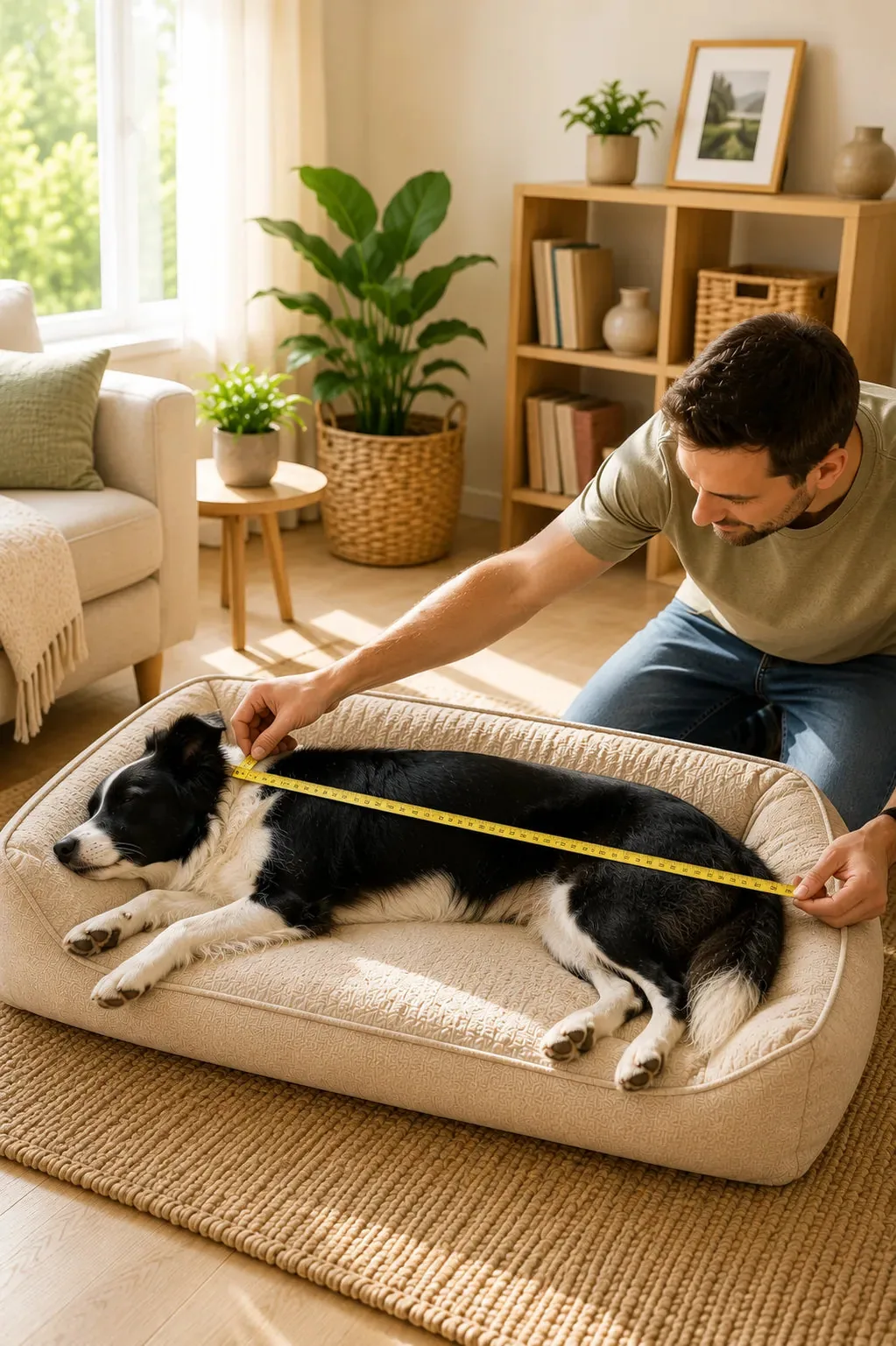
A poorly sized bed will never be comfortable, no matter how good it is. Don't rely only on weight or breed: two dogs of the same build can sleep in very different ways.
Here's a simple method:
- measure your dog while it's lying in its usual position
- add a few centimetres so it can change position without feeling cramped
- always check the manufacturer's size guide, since dimensions vary from brand to brand
If your dog falls between two sizes, it's often better to go with the larger one, especially if it likes to stretch out. On the other hand, a dog that sleeps curled up will often appreciate a cozier bed, as long as it has enough room to shift position.
Its sleeping position
The position it sleeps in will guide your choice.
| If your dog… | It might appreciate… |
|---|---|
| Sleeps curled up | A bed with bolsters to lean on |
| Sleeps fully stretched out | A flat mattress or a large cushion |
| Seeks out the floor when it's hot | A breathable or elevated bed |
| Likes to sleep against a wall or furniture | A bolster bed that provides support |
| Often changes position | A bed big enough to move freely |
Use this table as a guide, then watch what works for it.
Which type of bed should you choose?
Your dog's habits will naturally steer you toward the model that suits it best.
The bolster bed
The bolster bed suits dogs that like to lean against a cushion or sleep in a reassuring space.
A good choice if your dog:
- sleeps curled up
- likes to rest against an edge
- looks for a cozy spot to rest
The flat mattress
The flat mattress suits dogs that prefer to sleep without anything limiting their movements.
Best if it:
- sleeps with its legs stretched out
- changes position regularly
- likes to sleep on a large surface
The orthopedic bed
The foam in an orthopedic bed offers better support for senior dogs, dogs with joint pain or those recovering from an injury.
It's especially suitable if your dog:
- is getting older
- shows stiffness or joint pain
- needs extra support to lie down and get up
The elevated bed
Its raised frame promotes airflow. It's a good choice for dogs that look for a cooler surface.
Worth considering if it:
- seeks out the floor when it's hot
- spends a lot of time outdoors
- handles heat less well
The nest bed
With its high sides, the nest bed creates a cocoon loved by dogs that like to feel secure.
A good option if it:
- likes to snuggle in
- looks for a quiet place to sleep
- appreciates cozier spaces
No model suits every dog. If you're torn between two options, trust what you've observed rather than a photo or an online review.
Materials: what to check
Materials affect the bed's comfort as much as its durability. Here are the main things to consider.
The fill
Not all fills offer the same level of support.
- Memory foam: moulds to the body's contours and helps distribute weight better.
- High-density foam: resists sagging better and keeps its shape longer.
- Polyester fibre: makes the bed soft, but may lose volume faster depending on its quality.
The cover
Choose a cover that is:
- wear-resistant
- easy to clean
- washable or removable
The non-slip bottom
A non-slip bottom keeps the bed from sliding on hardwood, tile or vinyl floors.
Thickness isn't everything
A very thick bed doesn't automatically offer better support.
The quality of the materials matters just as much. A mattress made with good-quality foam can stay comfortable longer than a thicker model whose fill sags quickly.
If your dog is a senior or has joint pain, prioritize good support over a very thick bed.
Needs change with age
Puppies
For a puppy, choose a bed that is:
- easy to clean
- durable
- the right size to reassure it without being too bulky
Since a puppy grows quickly, it's not always worth investing right away in a high-end model.
Adult dogs
In adulthood, choose a bed that matches its sleeping style, build and activity level. If its habits change over time, it may be worth revisiting your choice.
Senior dogs
Over the years, lying down or getting up can become harder. A bed with good support helps reduce pressure on the joints and improves its comfort.
If your dog shows stiffness, arthritis or other joint problems, don't hesitate to ask your veterinarian for advice. They can recommend the type of bed best suited to its condition.
Where should you put its bed?
The best bed won't necessarily get used if it's in the wrong place. Like us, dogs have their favourite spots to rest.
Choose a location that is:
- quiet, away from high-traffic areas
- sheltered from drafts
- away from strong heat sources or several hours of direct sun
- somewhere your dog already likes to spend time
If your companion likes to stay close to you, put its bed in a room where the household gathers. It will be more eager to use it. A more independent dog, on the other hand, will prefer a quieter corner.
Helping it adjust to its new bed
Your dog won't necessarily adopt its new bed on day one. It may need a little time to get used to it.
Here are a few tips to encourage it:
- place it somewhere it already likes to rest
- add a blanket or toy that carries its scent
- let it explore at its own pace, without forcing it to lie down
- praise it calmly when it chooses to settle in on its own
If it still prefers the couch or the floor after several days, check that the bed suits its size and sleeping style, and that it's in the right place.
When should you replace it?
A bed isn't designed to last a dog's whole life. Over time, materials wear, the fill sags and support can decrease.
Here are a few signs it's time to replace it:
- the fill is flattened or misshapen
- your dog rests almost directly on the floor when lying down
- the fabric is torn or hard to clean despite washing
- odours persist even after cleaning
- your companion gradually stops using it when it used to
If the bed is still in good shape, replacing the cover or cushion can sometimes extend its life.
Frequently asked questions
Does it need an orthopedic bed even if it's young?
Not necessarily. A healthy dog can be perfectly comfortable in a supportive bed that isn't orthopedic. However, if your veterinarian has diagnosed a joint problem or your dog shows signs of discomfort, an orthopedic bed can be a good choice.
Does it need several beds?
Not necessarily. However, if your dog spends a lot of time in different rooms or regularly travels with you, having two beds can be handy.
How can you tell if its bed is still comfortable?
If the fill has sagged, your dog rests almost directly on the floor when lying down or it gradually stops using its bed, it's time to replace it.
Conclusion
Choosing a bed for your dog isn't just about comparing a few models. By taking the time to observe it and understand its needs, you can make a more informed choice.
The best bed isn't necessarily the most expensive or the most popular. It's the one your companion chooses to rest in, day after day.
Read next
Keep reading with these articles that may also interest you:
- Grooming your dog at home: the complete guide
- Dog paws in summer: how to prevent burned paw pads
- Heatwaves and dogs: how to help your dog stay cool
Sources
This article was written based on recommendations and information published by recognized organizations and veterinary institutions, including the American Kennel Club (AKC), VCA Animal Hospitals, the American Animal Hospital Association (AAHA) and PetMD. These sources were consulted to provide reliable, up-to-date information. They don't replace advice from your veterinarian, who remains the best person to assess your dog's specific needs.