Dog or cat poisoned: what to do right away?
What to do immediately, and the mistakes to avoid.
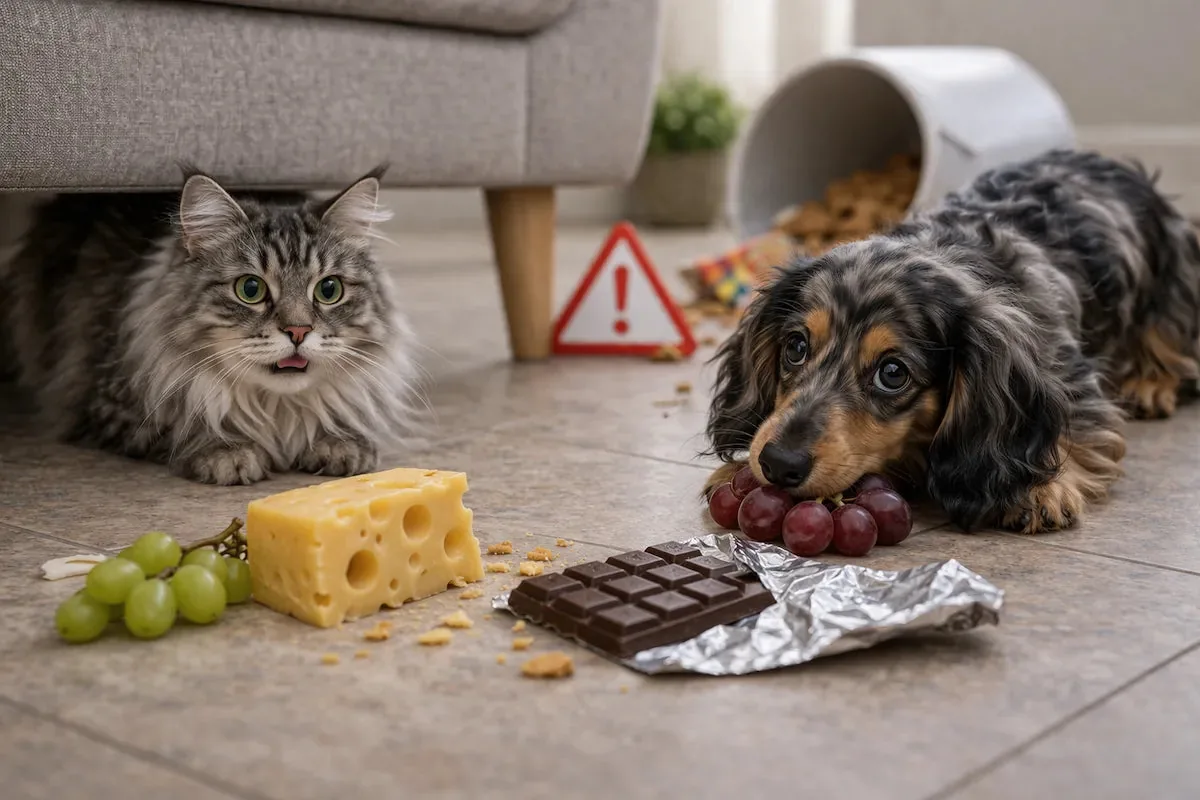
🐾 A few seconds of inattention is all it takes.
Food forgotten on the table, a bag left open… or even a half-open garbage can your dog or cat can dig through without you noticing.
At that moment, one question almost always comes up:
What did they swallow… and above all, what should you do now?
Some common foods can be dangerous, even toxic, for dogs and cats.
In this article, you'll find out exactly what to do, step by step, if your dog or cat eats a dangerous food.
** The information here is based on general animal health recommendations. When in doubt, it's always best to consult a veterinarian, since every situation can vary depending on the animal, the amount ingested and its state of health.
What to do in the first few minutes
Here's exactly what to do, without hesitating:
1. Remove access to the food
Take away anything still within reach.
Even a small additional amount can make things worse.
2. Quickly assess the situation
Ask yourself these questions:
- What was eaten?
- Roughly how much?
- How long ago?
An estimate is enough to guide the next steps.
3. Don't “wait and see”
That's the riskiest reflex.
An animal can seem fine… while the effects are already starting.
⚠️ Some symptoms appear several hours later.
4. Contact a veterinarian
Even if you're unsure, contact a professional.
You don't need to be certain it's serious to ask for advice.
5. Have the right information on hand
- Your pet's weight
- The food eaten
- The approximate amount
- The time it was eaten
If possible, keep the packaging or take a photo of the food to help the professional assess the situation faster and more accurately.
Even if your pet seems fine, some symptoms can appear several hours after ingestion.
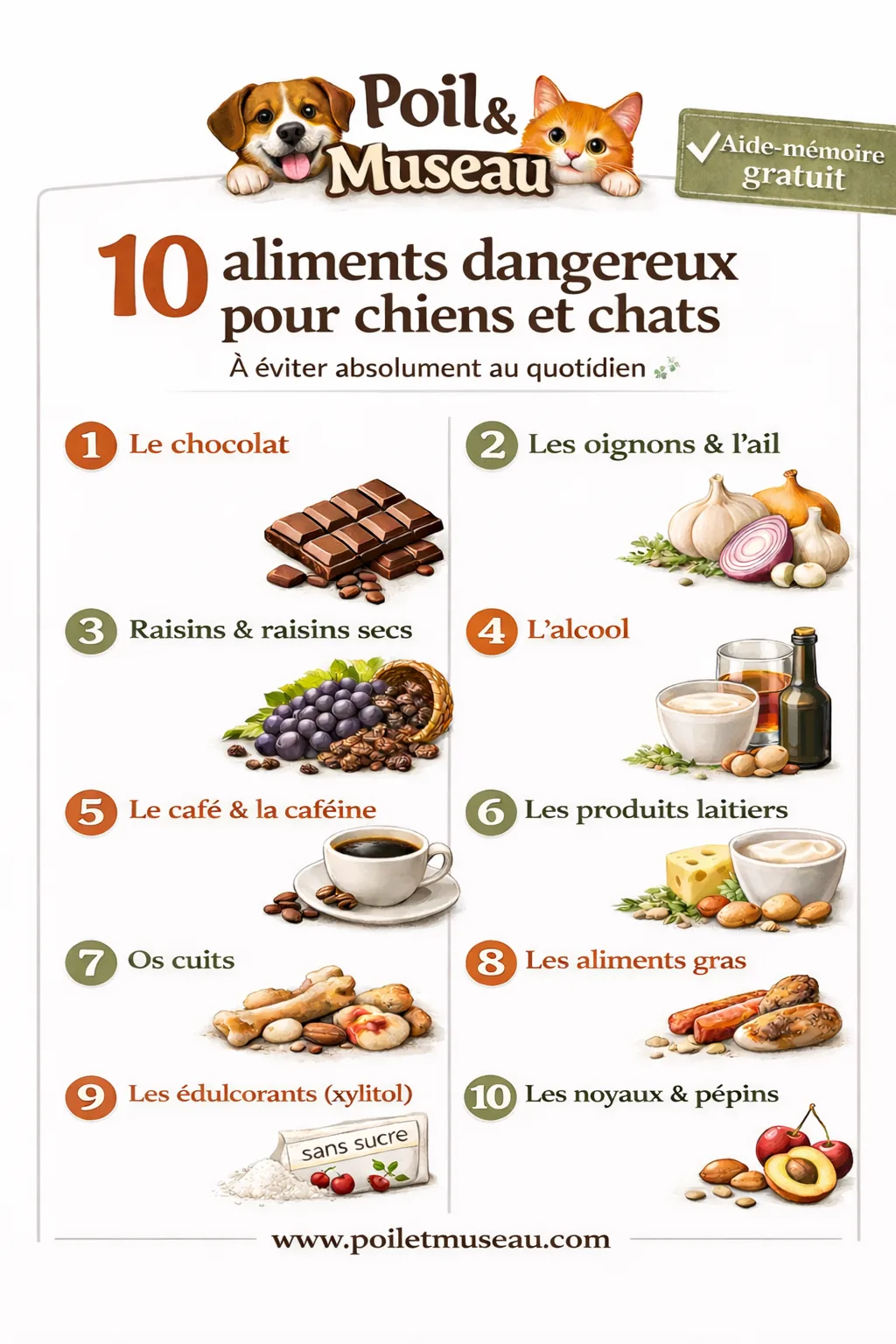
💡 So you don't forget anything under stress, you can refer to a simple, quick cheat sheet.
Download the dangerous foods cheat sheet (PDF, in French)
See also:
The 10 dangerous foods dogs and cats should never eat
Important things to know
The simple rule to remember
When in doubt:
If you're asking yourself the question… call.
Don't try to guess.
Don't rely on a past experience.
💡 The right reflex isn't to wait… it's to check.
When should you act immediately?
See a vet right away if:
- the food is known to be toxic
- the amount is unknown or large
- your pet is small, elderly or fragile
⚠️ It's an emergency if you notice:
- tremors
- loss of balance
- seizures
- difficulty breathing
In these situations, every minute counts: the more time passes, the more of the substance the body can absorb.
What you must not do
- don't induce vomiting without professional advice
- don't wait for symptoms to appear
- don't downplay the situation
Better to call for nothing… than too late.
What few people know
The effects aren't always immediate.
An animal can seem fine… and then get worse several hours later.
That's often when mistakes happen.
How to prevent it from happening again
Once the situation is under control, it's important to understand how your pet got access to the food.
A few simple habits can make all the difference:
- Keep dangerous foods out of reach
- Close bags and containers properly
- Secure your garbage cans
- Avoid leaving food accessible without supervision
💡 Prevention is still the best way to protect your pet every day.
In short
An accident can happen in seconds.
But a quick reaction can truly change everything.
Some accessories can also help make your home safer and limit everyday risks.
When in doubt, it's always better to act quickly and ask a professional for advice.
Important notice
⚠️ This article is provided for information only and does not replace a veterinarian's advice. Always consult a professional for an assessment suited to your situation.
Acting quickly and staying alert can make all the difference in protecting your pet's health.
According to recommendations from the Université de Montréal veterinary hospital (CHUV) and the Clinique vétérinaire des Appalaches, acting quickly can make all the difference when a dog or cat has ingested a potentially toxic substance.
—
Poil & Museau