My dog or cat is vomiting: when should I worry?
The signs to watch for and the right reflexes to react quickly.
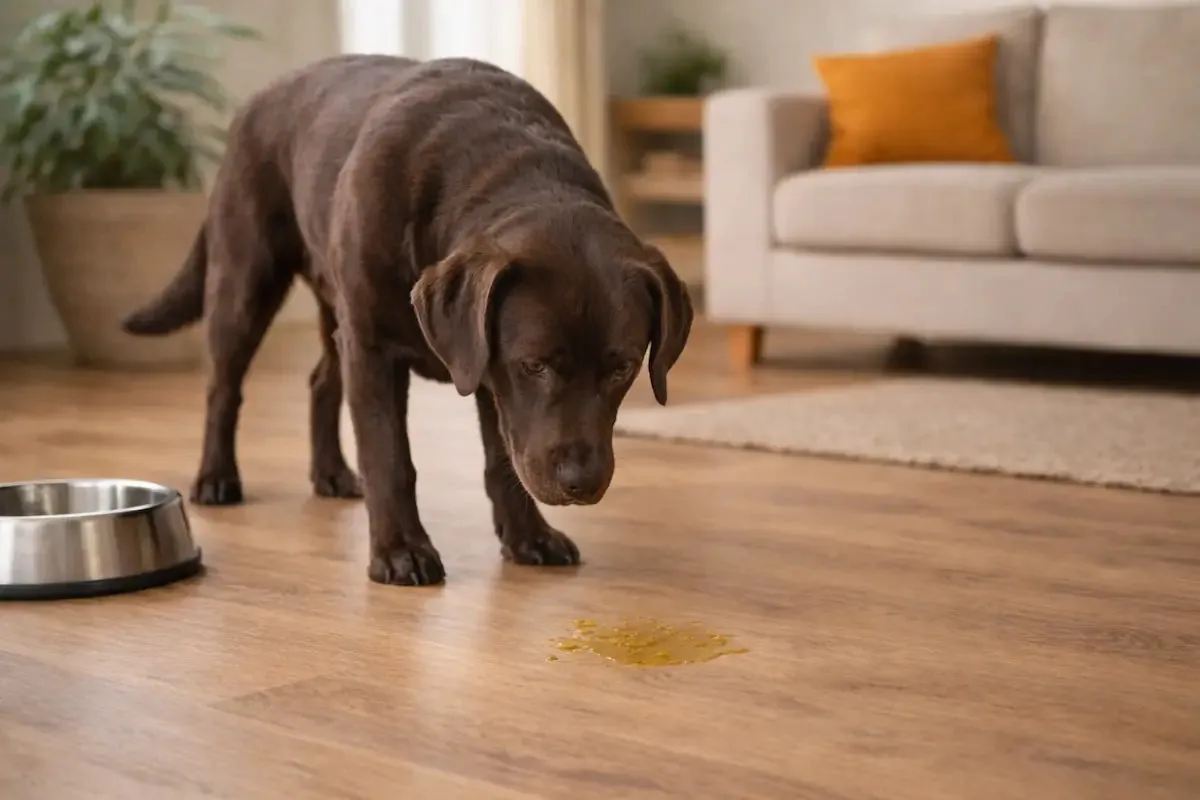
🐾 Is your dog or cat vomiting, and you're wondering whether you should worry?
It's common for a dog or cat to vomit occasionally. In many cases, vomiting isn't serious, but some signs can point to a more serious problem and should alert you.
Here's how to recognize normal situations… and the ones that call for quick action.
Why does a dog or cat vomit?
Vomiting in dogs and cats can have several causes, some harmless, some more serious.
Common causes (often not serious)
- Your pet ate too fast
- They swallowed something unusual
- They have a mild digestive upset
- Their diet changed recently
In these cases, the vomiting is usually a one-off.
Vomiting can be linked to diet or to eating unsuitable foods.
Some accessories, like a slow feeder bowl, can also help slow down eating and limit digestive discomfort.
More serious causes
- Food poisoning
- A swallowed foreign object
- Infection or illness
- A more significant digestive problem
In these situations, the vomiting often comes with other symptoms and needs special attention.
When the causes are less worrying, simple habits are sometimes enough to improve things.
A lick mat can help calm them and slow the pace, especially when they're stressed or excited.
When they're bored or eating to keep busy, a food-dispensing toy (Kong-type) becomes a good option.
Signs to watch for
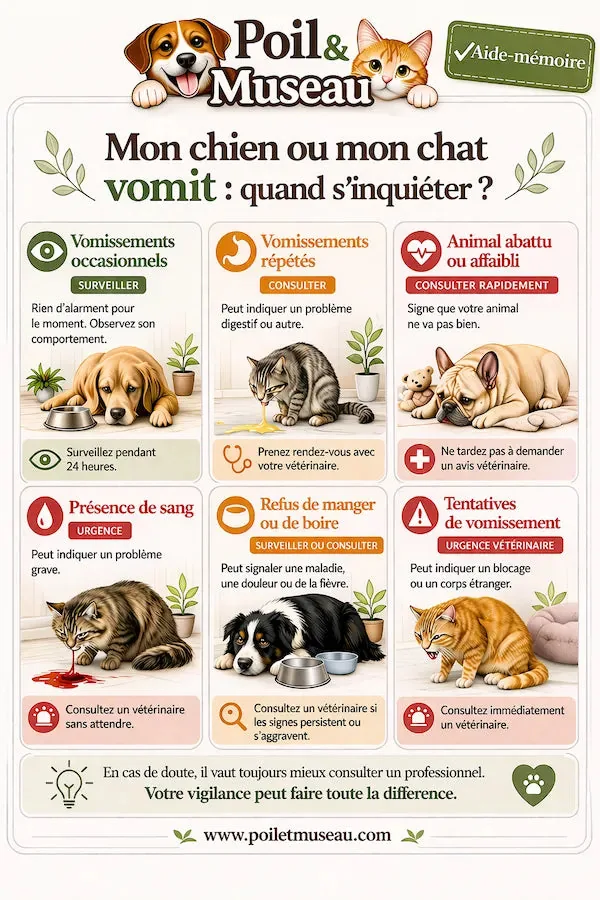
Some signs should get your attention:
- The vomiting keeps happening
- Your pet seems lethargic or weak
- They refuse to eat or drink
- They have diarrhea
- You see blood in the vomit
- They try to vomit without success
These symptoms can indicate a more serious problem.
💡 To help you quickly recognize the important signs, a handy cheat sheet is available.
Keep it close by in case of doubt.
Download the free printable cheat sheet (in French) so you don't forget anything
A single episode of vomiting: should you worry?
If your dog or cat vomits only once but stays active, eats normally and behaves as usual, it's often a harmless episode.
💡 Occasional vomiting isn't always worrying… it can simply be a one-time reaction of the body.
When should you see a veterinarian?
In most cases, a single episode isn't a concern.
However, some signs should alert you and need special attention.
⚠️ See a vet quickly if:
- The vomiting repeats or persists
- There's blood in the vomit
- Your pet seems lethargic or refuses to eat
- Other symptoms appear (diarrhea, fever, pain)
- It's a puppy, a kitten or a senior animal
When in doubt, it's better not to wait.
Early care often helps avoid more serious complications.
What to remember
Not all vomiting is serious, but some signs should alert you.
When in doubt, it's better not to wait.
Watching your pet closely lets you react quickly and avoid a complication.
Learn more
💡 Some vomiting can be linked to diet.
10 dangerous foods dogs and cats should never eat
💡 If you suspect your pet ate something it shouldn't, it's important to act quickly.
What to do if my dog or cat eats a dangerous food?
In short
If your dog or cat vomits, it's important to watch the situation closely.
Your instinct is often right.
Better to check than to let a problem get worse.
According to recommendations from VCA Animal Hospitals and the American Veterinary Medical Association (AVMA), repeated vomiting, vomiting with other symptoms, or vomiting combined with a loss of energy may warrant a veterinary visit.
—
Poil & Museau