Why do your dog's paws smell like corn chips?
Where the smell comes from, when it's normal and the warning signs.
🐾 You're relaxing on the couch.
Your dog snuggles up against you.
Then, all of a sudden…
A faint smell of corn chips.
You look around.
It's not the bag of chips.
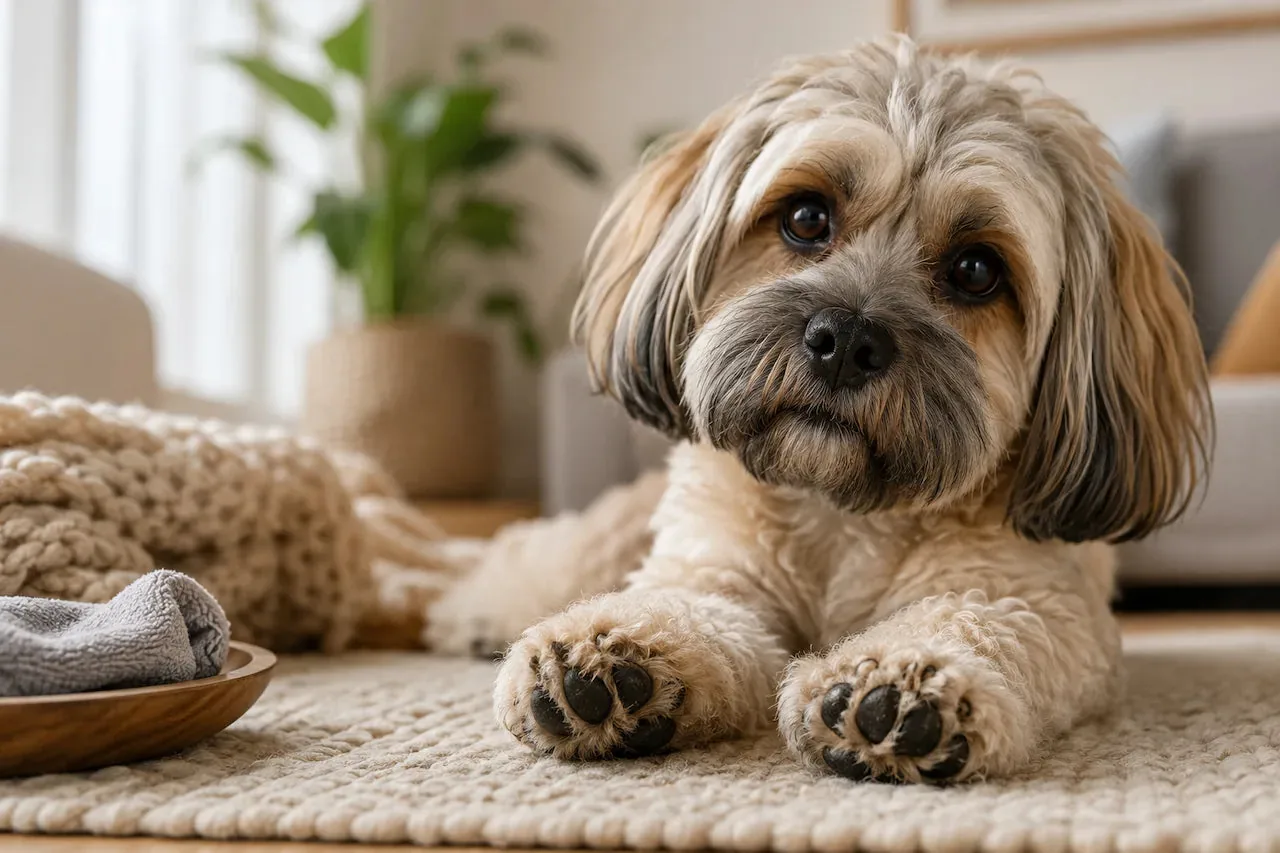
It's its paws.
And that raises a real question: why do dogs' paws sometimes smell like chips?
This smell is normal most of the time. Even a clean dog can give off this little scent from its paw pads.
And no, you're not the only one who's noticed it.
It's hard not to think of a certain brand of tortilla chips the first time you notice it.
But since paws touch everything (sidewalks, grass, rain, snow, mud), it's still worth checking them regularly.
So where does this chip smell come from… and when should you really pay attention?
Where does the smell of your dog's paws come from?
Your dog's skin naturally hosts bacteria and yeasts. On the paws, warmth and moisture create a favourable environment for these microorganisms, which can produce this scent reminiscent of corn chips.
So it's not automatically a sign of dirt or infection.
After a walk, a hot day or an outing in the rain, the smell may become a little stronger.
Is a corn chip smell worrying?
If your dog walks normally, doesn't constantly lick its paws and its pads look healthy, there's usually nothing to worry about.
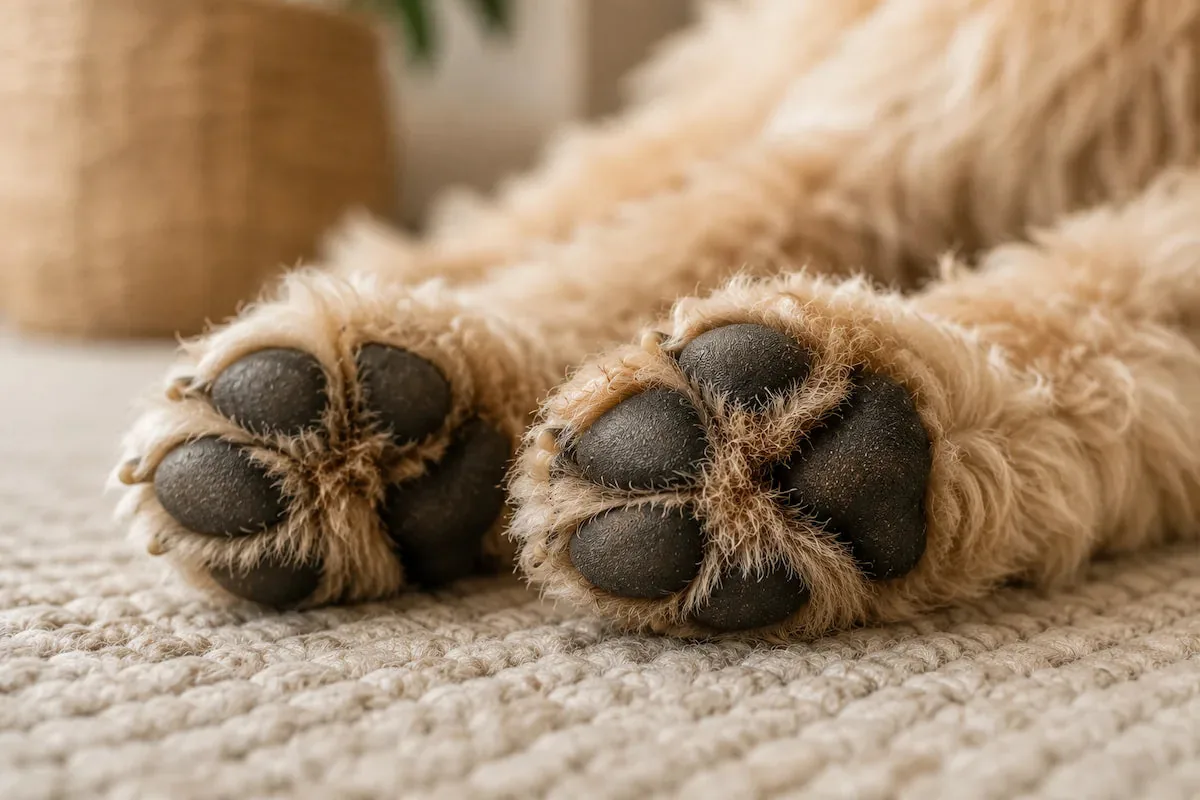
Your dog's paws won't necessarily smell like soap or fresh laundry.
After all, paw pads spend their days exploring the world.
Signs to watch for
However, if the smell becomes very strong, sour or comes back quickly after cleaning, it's best to examine its paws.
Here's what to watch for:
- redness between the toes;
- intense licking;
- irritated skin;
- cracked pads;
- a persistent bad smell;
- pain;
- difficulty walking;
- constant moisture;
- hair loss around the paws.
These signs can indicate irritation, an allergy or an infection.
With constant licking, the paws stay damp and the skin can become even more sensitive.
Why do dogs lick their paws?
After an outing, a dog may simply want to clean itself.
But when licking becomes frequent, different causes can explain it:
- irritation;
- allergies;
- dry skin;
- moisture trapped between the toes;
- salt or other products used on sidewalks in winter;
- a hot or irritating surface;
- boredom or stress.
When a paw is sensitive or irritated, the dog may try to soothe it by licking.
After a walk in the snow, a dog may spend several minutes licking its paws once back home. Salt, ice and moisture can irritate the skin between the toes and cause this discomfort.
Can moisture make the smell stronger?
After a walk in the rain or snow, moisture can stay trapped between the pads.
The hair between the toes also holds water and dirt.
The result:
- the smell becomes stronger;
- the paws stay damp;
- the skin can become sensitive.
Remember to dry the paws well, especially between the toes.
Keeping a towel near the door or a few dog-safe wipes within reach makes coming home from walks easier.
Should you wash your dog's paws?
There's no need to turn every return from a walk into a spa session.
Cleaning can be useful, though, if the paws are muddy or have been in contact with salt or other products used on sidewalks.
A few simple steps are enough:
- remove the mud;
- rinse off salt or residue if needed;
- check for small injuries;
- dry the pads well.
A paw that's clean but still damp can keep developing smells or become more sensitive.
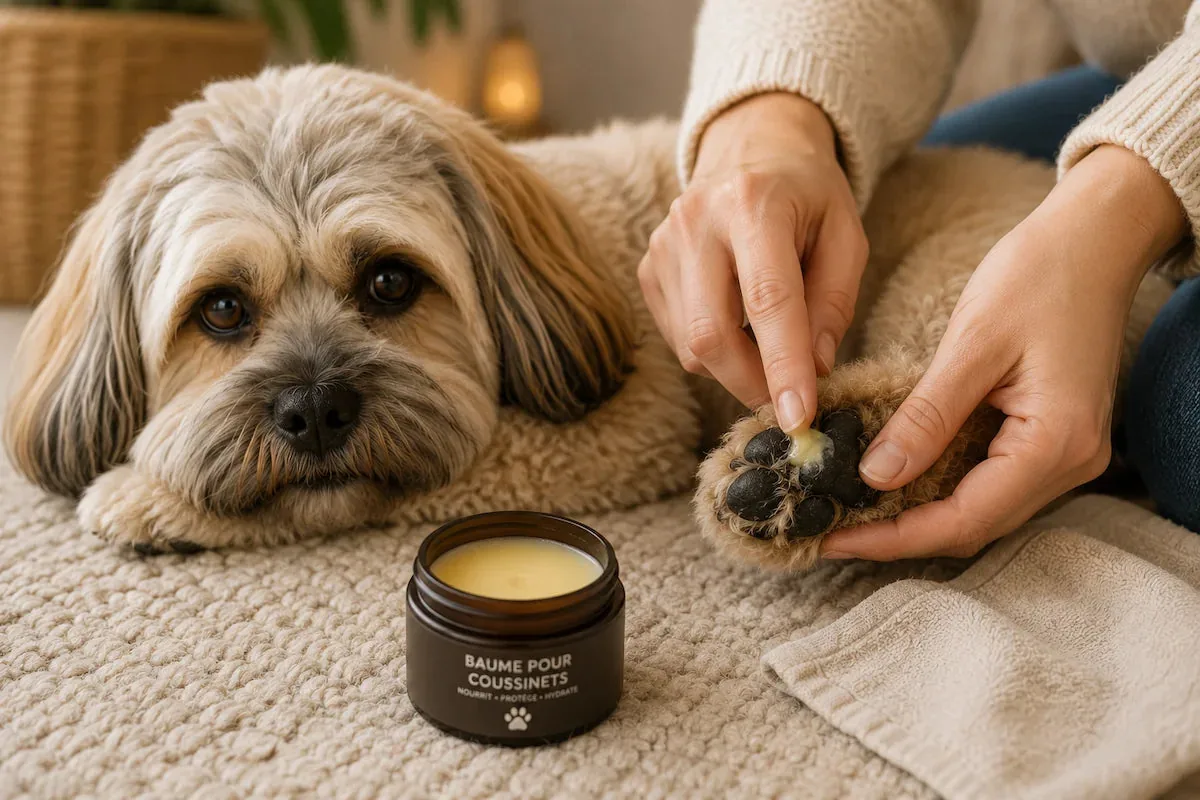
Useful accessories for paws
A few accessories can make paw care easier:
- a microfibre towel to dry them after a walk;
- paw wipes for a quick clean;
- a paw cleaner to remove mud and dirt;
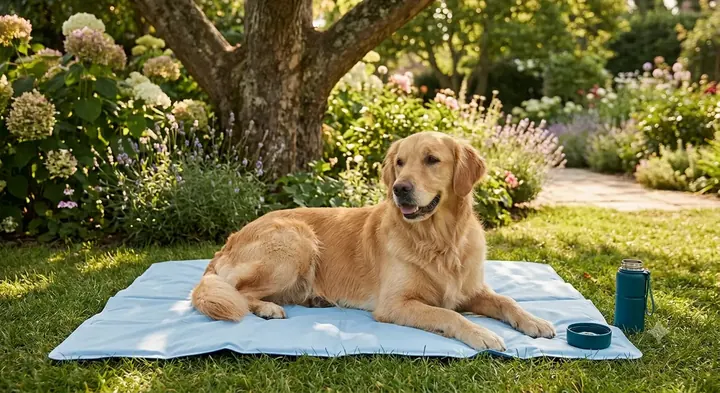
- an absorbent mat at the door for rainy or snowy days;
- a paw pad balm when they're dry.
No need to have everything on hand. The choice mostly depends on your dog's outings and the season.
How do you protect your dog's paws in winter?
Between salt, ice and snow, winter can be especially tough on paw pads.
Dog boots can help protect paws against:
- cold;
- salt;
- moisture;
- icy surfaces;
- small cuts caused by ice.
And yes… the first few minutes are sometimes quite a funny show.
Little paws lifted very high.
A strange walk.
Tiny hops across the living room.
After a few tries, its gait becomes more natural again.
Boots should fit well so they stay in place without squeezing the paws.
For dogs sensitive to cold or salt, boots can make winter walks more comfortable.
How do you protect your dog's paws in summer?
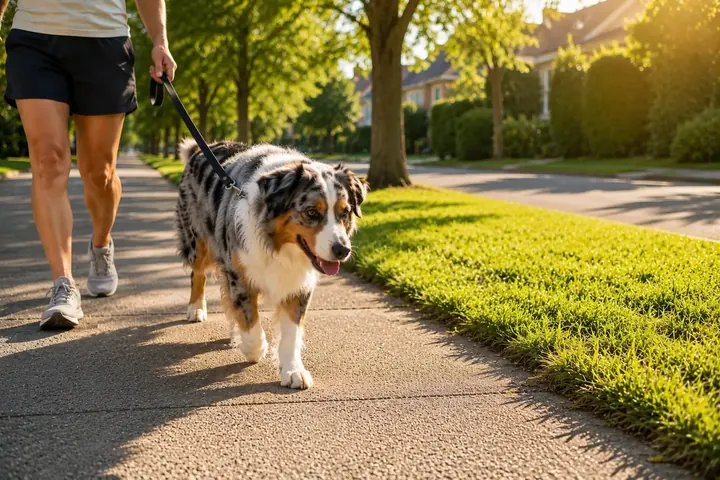
Hot asphalt, sand and long walks can irritate paw pads.
Before heading out, simply place your hand on the ground.
If it's too hot for you, it's too hot for your dog.
After the walk, here are a few signs to watch for:
- redness;
- licking;
- a hesitant gait;
- sensitive pads.
On very hot days, it's best to go out early in the morning or later in the evening.
When should you see a veterinarian?
A faint corn chip smell is generally nothing alarming.
However, it's best to see a veterinarian if the smell becomes very strong or comes with redness, pain, a wound, constant licking or difficulty walking.
A veterinarian can check whether irritation, an allergy or an infection is involved.
Good to know
Paw pads aren't only for walking, running or absorbing shocks.
They also contain sweat glands that let the dog release a small amount of heat through its paws.
This role is limited, since dogs cool down mainly by panting.
Read next
If this topic interests you, you might like:
- Dog paws in summer: how to prevent burned paw pads
- Grooming your dog at home: the complete beginner's guide
- How often should you bathe your dog, and which shampoo should you choose?
In short
The corn chip smell on paws is normal most of the time and can get stronger with heat or moisture.
Check the pads regularly and dry the paws well after an outing in the rain or snow, or when your dog has walked on a wet surface.
If the smell becomes strong or comes with redness, pain, constant licking or difficulty walking, it's best to see a veterinarian.
Sources
According to specialists at VCA Animal Hospitals and the American Kennel Club (AKC), a dog's paw pads naturally host bacteria and yeasts that can contribute to this characteristic smell. Checking the paws regularly also helps quickly spot signs of irritation, infection or injury.