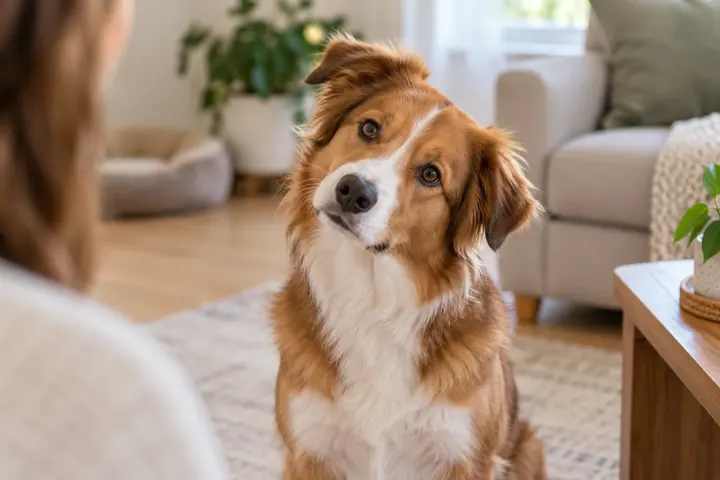
Why does my dog follow me everywhere in the house?
Attachment, habits, observation, need for comfort: the explanations.
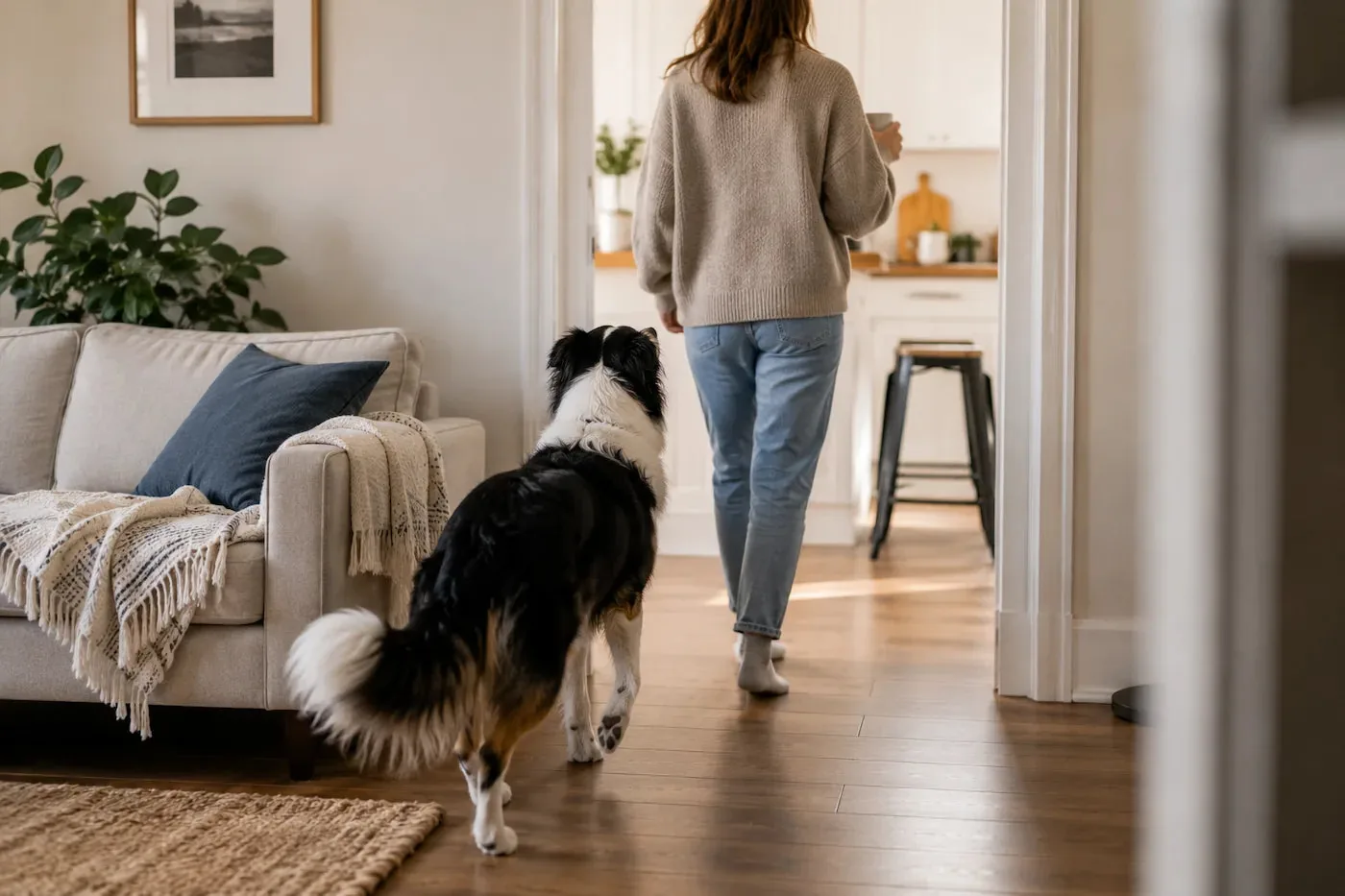
You get up to grab a glass of water.
A few seconds later, your dog is already behind you.
You walk down the hallway.
It comes along.
You go back to the living room.
So does it.
Even when nothing interesting seems to be happening, it keeps an eye on where you're going.
So why does it do that?
Is it looking for attention? Waiting for a walk? Hoping for a treat?
The answer isn't always the same.
Depending on the situation, it may want to take part in what's happening in the house, understand what's coming or simply want to stay close to you.
When a dog follows you everywhere in the house, it's no accident.
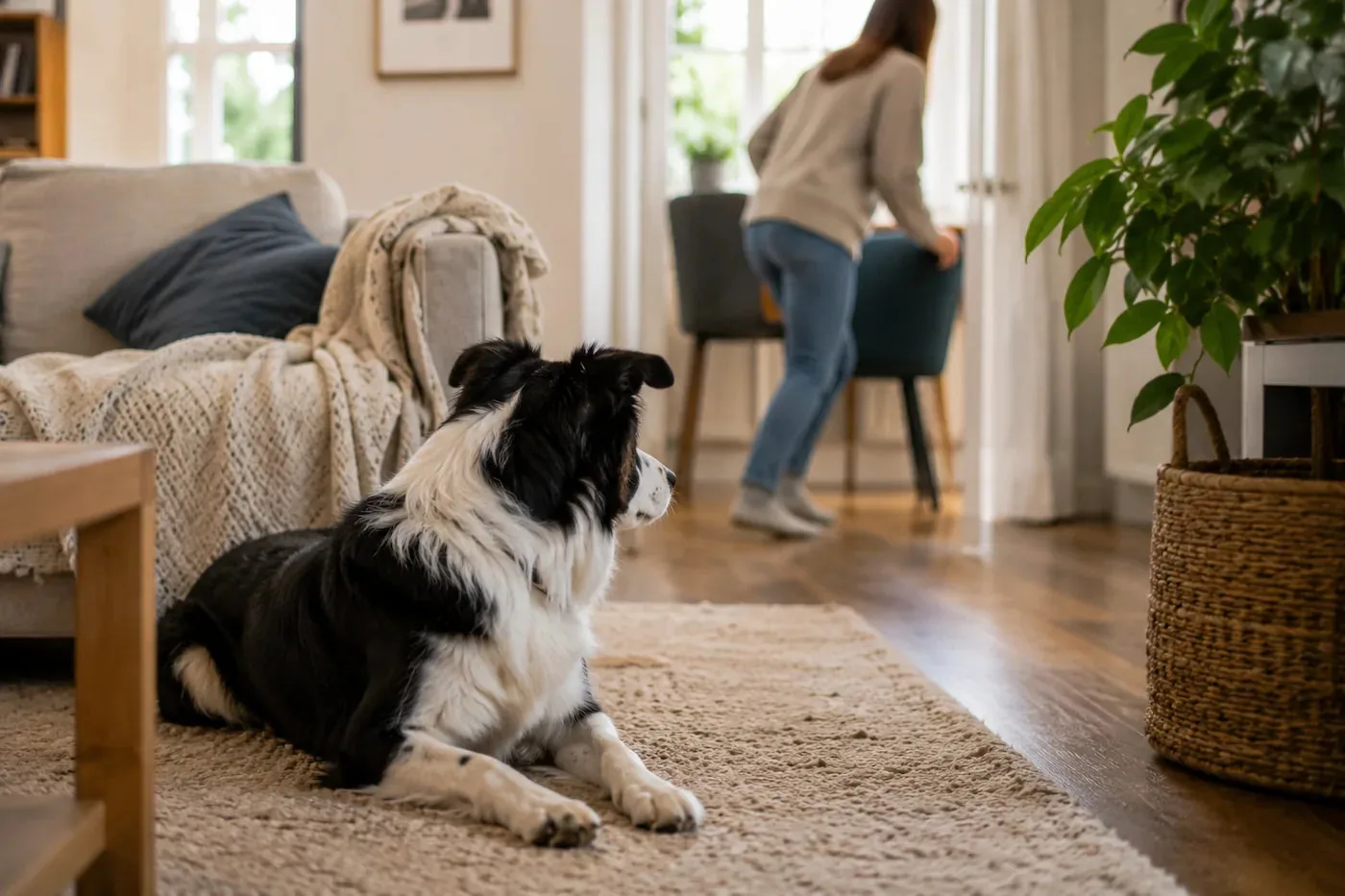
Why does your dog like to know where you are?
For a dog, movement around the house is full of information.
A door opening.
Shoes going on.
A leash being picked up.
A cupboard moving.
All these little details can signal something interesting.
That's why it notices your movements before you've even left the room.
It doesn't automatically mean it lacks independence.
It simply likes to keep an eye on what's going on in the house.
When it follows you already gives a good clue
The moment your dog decides to follow you is a good hint.
It shows up as soon as you walk into the kitchen
The kitchen is one of the most fascinating places in the house.
Smells, meals, treats and anything food-related naturally attract its attention.
In this situation, it's not necessarily you it's following.
It may be what could happen next.
It comes along even when nothing is happening
You go get something.
You change rooms.
You come back a few moments later.
And it's still there.
This attitude simply shows that it likes being with you.
For it, staying in the same room as you can be as enjoyable as an activity.
It arrives as soon as you pick up your keys
Your dog doesn't need to understand every word to know what's coming.
Over time, it links specific gestures with events it enjoys.
Keys mean an outing.
The leash means a walk.
The treat container means a reward.
These associations become easy for it to recognize.
Your dog notices details you miss
A simple gesture is all it takes.
You open a cupboard.
It arrives.
You pick up its harness.
Its tail is already wagging.
You take out your walking shoes.
It's ready before you are.
It notices things we don't even notice anymore.
By seeing the same gestures again and again, it learns to recognize what signals an outing, a walk or a reward.
💡 Did you know?
In canids, keeping track of the group's movements is part of natural behaviour.
This habit helps them stay informed about what's happening around them and avoid missing an important opportunity.
Even comfortably settled at home, your dog still keeps part of this instinct.
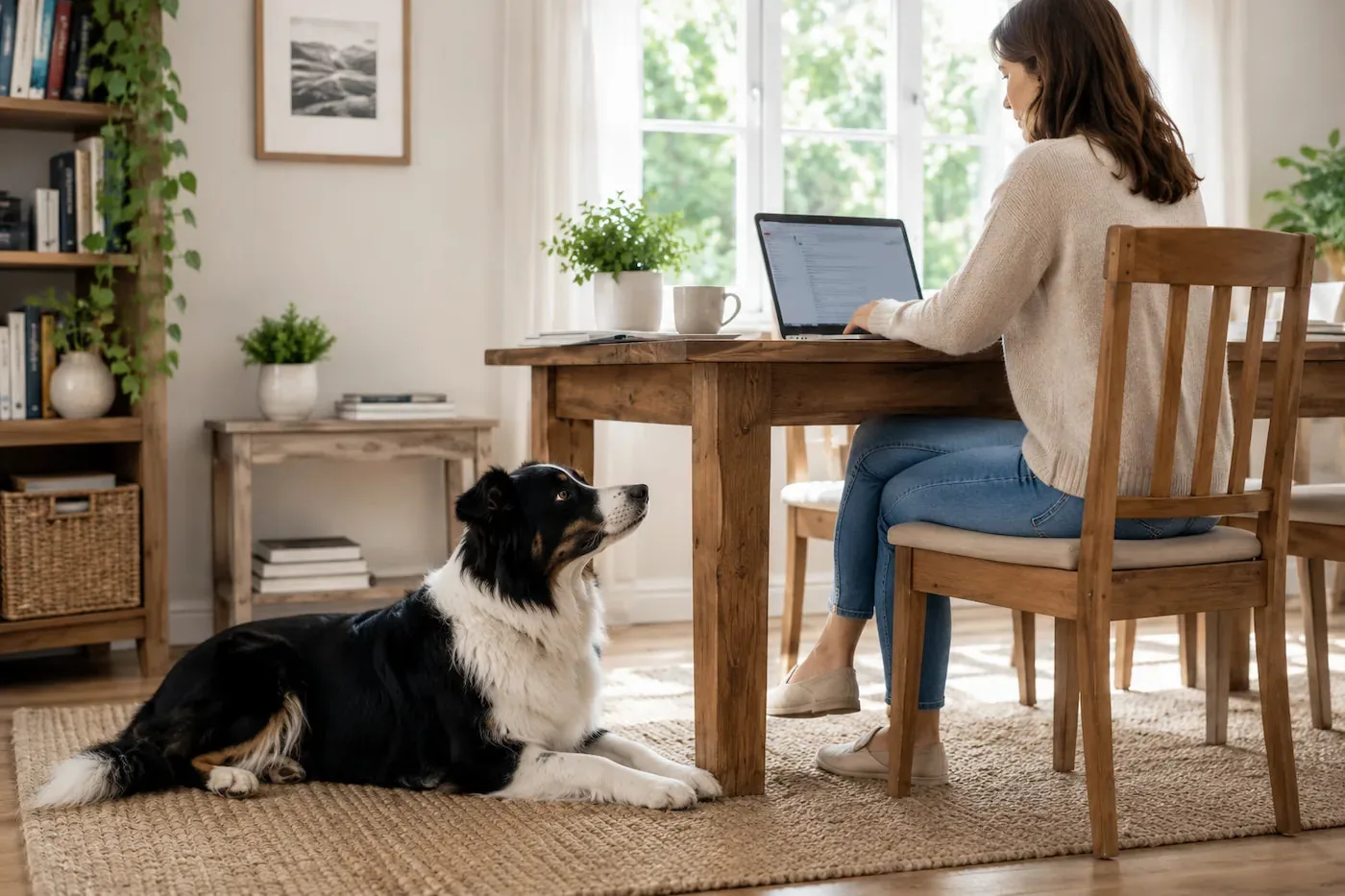
Why has your dog become clingier than before?
If you've noticed a recent change, take a few minutes to think about what has happened over the past few months.
A move.
A new baby.
A new pet.
A long vacation.
A schedule change.
All these changes can explain why it's seeking your company more.
If your dog rarely followed you before and this habit appeared recently, take a moment to think about what has changed around it. The answer is sometimes where you least expect it.
When you're not feeling well
Many people notice their dog becomes more present during a period of fatigue or illness.
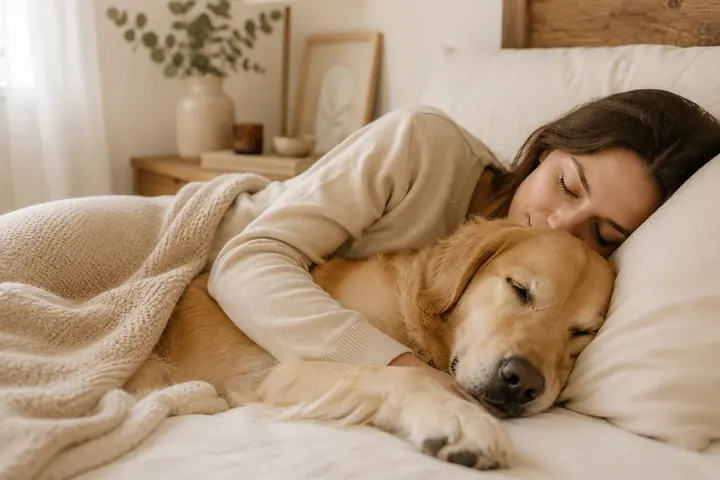
It may choose to sleep closer to you or follow you around the house more often.
After several days apart
After a trip away or a vacation, it's not unusual for a dog to seek more contact for a while.
This reaction tends to fade after a few days.
After a move
A new environment brings plenty of discoveries.
New smells.
New sounds.
New places to explore.
During this adjustment period, it may seek your presence more.
When a newcomer arrives in the home
The arrival of a baby, a dog or a cat sometimes changes the balance of the household.
Staying close to you can then be a way to regain a sense of stability.
During a major change in your schedule
Remote work, retirement or a new job can transform everyone's routines.
Your dog adjusts its own too.
Age can also play a role
In puppies
Everything is new.
You're its main point of reference.
So it's normal for it to regularly check where you are.
In adult dogs
Over the years, it learns to recognize the gestures, schedules and little routines of the household.
In senior dogs
The need for comfort can become stronger.
Time spent by your side becomes even more important.
A comfortable mattress can also contribute to its well-being, especially as it gets older.
🐾 Do you recognize your dog in several of the situations above?
In most cases, following its people from room to room is a perfectly normal habit for a dog.
It's not necessarily a sign of anxiety or a problem to fix.
Is my dog following me in a normal way?
Ask yourself these few questions:
✔ Can it sleep in another room without difficulty?
✔ Does it stay calm when you close a door?
✔ Can it relax on its own for a while?
✔ Does it stay calm when you leave the house?
✔ Does it settle down quickly after you leave?
If you answered yes to most of these questions, it's probably a perfectly normal situation.
When should you pay closer attention?
Following someone from room to room is generally nothing to worry about.
However, it can be useful to look further when you notice:
- frequent whining;
- restlessness as soon as a door closes;
- destruction while you're away;
- an inability to calm down alone;
- marked stress when it loses track of you.
In that case, advice from a veterinarian or a canine behaviour specialist can be helpful.
💡 Try this
If your dog tends to follow you everywhere or has trouble keeping busy when it's alone in a room, a lick mat, a treat-dispensing toy or a KONG Classic can help it stay busy longer.
In short
The next time your dog gets up at the same time as you, take a few seconds to watch it.
Is it the direction you're heading that interests it?
An event it thinks it recognizes?
Or simply the desire to stay close to you?
Behind this seemingly ordinary gesture lie attachment, observation and everything it has learned by your side over time.
And that's probably why it appears behind you just when you thought you were alone in the kitchen. 🐾
If you enjoyed this topic, you'll also like:
🐾 Why do dogs love treats so much?
🐾 Why do dogs like to sleep near you?
🐾 Why do dogs love sniffing so much on walks?
Sources
To write this article, we consulted resources from the National Library of Medicine (PMC), VCA Canada and the ASPCA, which provide information on the attachment bond between dogs and their people and on behaviours linked to separation anxiety.